This is the credit-related personal information management policy of TPG Telecom Limited ("TPG Telecom") and each of the brands and subsidiaries listed at the end of this policy, including but not limited to Vodafone, TPG, iiNet, AAPT, Lebara Mobile, Felix Mobile, Internode, and Kogan Mobile, (referred to as "TPG Telecom", "we", "us", or "our").
Select one of the links below to jump to a query:
- How do we Conduct Credit Checks?
- No Consent Required
- Why do we collect, hold, use or disclose credit information or credit eligibility information?
- Impact to your credit score
- What kinds of credit information do we collect or hold?
- How do we obtain credit information?
- How do we hold credit information?
- What kinds of credit eligibility information do we hold?
- What kinds of information do we derive from credit reporting information?
- On what basis do we make a decision to decline/limit your application for services?
- Contact details for Credit Reporting Bodies
- To which credit reporting bodies are we likely to disclose credit-related personal information?
- How can you access your credit information or credit eligibility information?
- Can you request a credit reporting body not to use or disclose credit reporting information?
- How accurate is the credit information or credit eligibility information we hold? If it’s incorrect, can you have it corrected?
- How can you complain if you believe we have failed to comply with the Privacy Act or the Credit Reporting Code?
- To whom may we disclose credit information or credit eligibility information?
- How can you obtain this policy, or a credit reporting body’s policy about its management of credit-related personal information?
How do we Conduct Credit Checks?
A credit check involves TPG Telecom disclosing personal information about you to a credit reporting agency or third-party information providers to obtain and use credit and other reports and information about you to assess your creditworthiness and application for TPG Telecom products and services. TPG Telecom's request for a credit check may be recorded by the credit reporting agency to create or maintain a credit information file about you, which may affect your credit score or credit rating.
TPG Telecom may also:
- request a credit report from a credit reporting agency to assist in the collection of any overdue payments; and
- disclose information to a credit reporting agency to list default payments.
Information that TPG Telecom may disclose to a credit reporting agency before, during and after you become a TPG Telecom customer, includes:
- information in your application form and of your account;
- that you have applied for credit with TPG Telecom;
- that TPG Telecom is a current credit provider to you;
- payments that are overdue and are in collections;
- any cheque of yours for $100 or more which has been dishonoured more than once;
- any serious credit infringement committed by you;
- advice that payments are no longer overdue.
TPG Telecom may also disclose certain information about you and any debt you have with TPG Telecom to a debt collection agency or any potential assignee.
When TPG Telecom conducts any credit check or discloses your personal information for credit purposes, it is bound by the Privacy and Telecommunications Acts.
No Consent Required
In accordance with the Privacy (Credit Reporting) Code 2024, your consent is not required for us to disclose your personal information to a credit reporting agency or third-party information provider.
Why do we collect, hold, use or disclose credit information or credit eligibility information?
We may collect, hold, use and disclose credit information and credit eligibility information about you for the following purposes:
- assessing your application for a postpaid service;
- collecting payments that are overdue;
- a commercial credit related purpose;
- our internal management purposes that are directly related to the provision or management of consumer credit or commercial credit; and
- assisting you to avoid defaulting on your obligations under your agreement(s) with us.
Impact to your credit score
A record of the credit check may be used and, as relevant, disclosed for the purposes of the credit reporting body or provider assessing your credit worthiness, including calculation of a credit score or credit rating.
What kinds of credit information do we collect or hold?
Generally, we may collect and hold credit information about you which may include:
- your name, date of birth, current and previous residential address, employment status, occupation, the name of your current or last known employer, employer’s phone number, and ID documentation, such as your driver’s licence number, passport number or Medicare number (or other government-issued identification);
- the name of any entities which provide consumer credit to you, whether those entities hold an Australian credit license, the type of consumer credit those entities provide to you, the date on which the consumer credit is entered into and the terms and conditions relating to repayment of the consumer credit (or other terms and conditions relating to the consumer credit prescribed by regulations made under the Privacy Act), the maximum amount of credit available and the date any consumer credit is terminated or otherwise ceases to be in force;
- information as to whether any other credit provider, mortgage insurer or trade insurer has requested certain information about you from a credit reporting body, and the type of credit and amount of credit sought in connection with the request;
- the type of credit and the amount of credit sought in an application you have made to a credit provider;
- subject to the relevant credit provider having given you notice required under the Privacy Act, information about a payment of an amount equal to or greater than $150 (or a higher amount prescribed by regulations made under the Privacy Act) that you are at least 60 days overdue in making in relation to consumer credit, and information about when such an overdue payment has been paid;
- information as to any variation of the terms and conditions of consumer credit provided to you, or as to whether you have been provided with new consumer credit, because of a payment being so overdue;
- information about a judgement of an Australian court that is made, or given, against you in proceedings (other than criminal proceedings) and that relates to any credit that has been provided to, or applied for by, you;
- information about you that is entered or recorded in the National Personal Insolvency Index and that relates to:
- a bankruptcy of you;
- a debt agreement proposal given by you;
- a debt agreement made by you;
- a personal insolvency agreement executed by you;
- a direction given, or an order made, under section 50 of the Bankruptcy Act that relates to your property;
- an authority signed under section 188 of the Bankruptcy Act that relates to your property;
- any other publicly available information that relates to your activities in Australia or the external Territories and your credit worthiness; and
- the opinion of a credit provider that you have committed, in circumstances specified by the provider, a serious credit infringement in relation to consumer credit provided by the provider to you.
How do we obtain credit information?
We may obtain credit information in a number of ways, including:
- when you complete a TPG Telecom account application, service enquiry form, or similar;
- from other companies in the TPG Telecom group;
- from third party companies like credit reporting bodies, other credit providers, law enforcement agencies and other government entities;
- from publicly available sources of information;
- during recordings of calls made when you contact TPG Telecom; and
- we may also collect credit information by other means and will take all reasonable steps to inform you if and when we do.
How do we hold credit information?
We hold that information in an encrypted electronic database located in Australia.
What kinds of credit eligibility information do we hold?
We may hold credit eligibility information about you, such as:
- any of the types of credit information listed above which was disclosed to us by a credit reporting body under the Privacy Act;
- any personal information (other than sensitive information (as defined in the Privacy Act)) about you that is derived by a credit reporting body from credit information about you that is held by the body that has any bearing on your credit worthiness and that is used or could be used in establishing your eligibility for consumer credit; and
- information we derive from that credit reporting information (as described below).
What kinds of information do we derive from credit reporting information?
We derive information such as your credit score from the credit reporting information disclosed to us by a credit reporting body.
On what basis do we make a decision to decline/limit your application for services?
Our decision to either decline or limit your application for services may be wholly or partly based on the credit information or credit eligibility information that we receive from the credit reporting bodies that we use.
Contact details for Credit Reporting Bodies
To which credit reporting bodies are we likely to disclose credit-related personal information?
The credit reporting bodies to which TPG Telecom is likely to disclose that information are: Illion and Equifax.
Those credit reporting bodies may include the information we disclose in reports provided to credit providers to assist them to assess your credit worthiness, including the calculation of your credit score and credit rating. If you fail to meet your payment obligations in relation to consumer credit, or commit a serious credit infringement, we may be entitled to disclose this to those credit reporting bodies.
How can you access your credit information or credit eligibility information?
You can request a copy of your credit information or credit eligibility information from the relevant credit reporting body.
Contact details for the credit reporting bodies that we use are:
Illion 1300 734 806 (personal)
13 23 33 (business)
8.30am – 5.30pm AEST (Monday – Friday)
https://www.illion.com.au/
Equifax 138 332 (personal)
1300 921 621 (business)
8.30am – 5.00pm AEST (Monday – Friday)
https://www.equifax.com.au/personal/
Can you request a credit reporting body not to use or disclose credit reporting information?
You may request a credit reporting body:
- not to use credit reporting information they hold about you for the purposes of pre-screening of direct marketing by a credit provider; and
- not to use or disclose credit reporting information about you, if you believe on reasonable grounds that you have been, or are likely to be, a victim of fraud.
How accurate is the credit information or credit eligibility information we hold? If it’s incorrect, can you have it corrected?
We take reasonable measures to ensure that the credit information and credit eligibility information we hold is accurate, up-to-date and complete.
If you think that the credit information or credit eligibility information we hold about you is incorrect, you may seek to request a copy of the information and have it corrected by completing our credit information request form and emailing the completed form to Credit@tpgtelecom.com.au.
Please note that the above process is not for the purpose of requesting a review of our decision to either decline or limit your application for services.
How can you complain if you believe we have failed to comply with the Privacy Act or the Credit Reporting Code?
If you believe that we have failed to comply with Division 3 of Part IIIA of the Privacy Act or the Credit Reporting Code, you may make a complaint by emailing Credit@tpgtelecom.com.au and specifying the nature of your complaint. If your complaint relates to a breach of section 21T or 21V of the Privacy Act, you may complain to the Australian Privacy Commissioner.
If you make such a complaint to us, we will:
- give you a written acknowledgement of your complaint within 7 days after you made the complaint; and
- investigate the complaint.
We will consult with any credit reporting body or credit provider that we consider necessary to investigate the complaint. After investigating the complaint, we will give you a written notice about our decision. If we are unable to give that notice within 30 days after you made the complaint, we will inform you of this within 30 days after you made the complaint and notify you of the reason for the delay, the expected timeframe to resolve the complaint and seek your agreement to us giving that notice at a later date.
To whom may we disclose credit information or credit eligibility information?
We may disclose credit information or credit eligibility information to entities both within and outside Australia (including entities without an Australian link within the meaning of the Privacy Act). Entities outside of Australia to whom we may disclose credit information or credit eligibility information are likely to be located in the Republic of India, the Philippines or the Republic of Fiji.
How can you obtain this policy, or a credit reporting body’s policy about its management of credit-related personal information?
You may obtain free of charge:
- A copy of this policy. You can reach out to our customer care team on 13 22 58 for a hardcopy version of this policy:
- Illion’s policy about the management of credit-related personal information.
- Equifax's policy about the management of credit-related personal information.
This Policy applies to the TPG Telecom Group, including but not limited to the following entities:
- TPG Telecom Limited (formerly Vodafone Hutchison Australia Pty Limited) ABN 76 096 304 620.
- Vodafone Australia Pty Limited ABN 86 056 161 043
- Vodafone Pty Limited ABN 76 062 954 554
- Vodafone Network Pty Limited ABN 31 081 918 461
- iiNet Limited ABN 48 068 628 937
- Chime Communications Pty Ltd ABN 90 073 119 285
- Agile Pty Ltd ABN 36 080 855 321
- TransACT Victoria Communications Pty Ltd ACN 063 024 475
- Adam Internet Pty Ltd ABN 22 055 495 853
- TransACT Capital Communications Pty Limited ABN 23 093 966 888
- Westnet Pty Ltd ABN 50 086 416 908
- AAPT Limited ACN 052 082 416
- Internode Pty Ltd ABN 82 052 008 581
- TPG Corporation Limited ABN 46 093 058 069
- TPG Internet Pty Ltd ABN 15 068 383 737
- TPG Network Pty Ltd ABN 85 003 064 328
- Chariot Pty Ltd ABN 31 088 377 860
- SPTCom Pty Ltd ABN 75 111 578 897
- Soul Communications ABN 99 085 089 970
- PowerTel Limited ACN 001 760 103
- Request Broadband Pty Ltd ABN 89 091 530 586
- Connect Internet Solutions Pty Ltd ABN 61 054 112 435
- Soul Pattison Telecommunications Pty Ltd ABN 79 001 726 192
- Soul Communications Pty Ltd ABN 99 085 089 970
Registered address: Level 27, Tower 2, International Towers Sydney, 200 Barangaroo Avenue, Barangaroo NSW 2000
Version: 2.0
The current policy came into effect on 09/09/2025 and may be updated from time to time by posting a new version on our website.
If your phone isn't automatically detecting iiNet or Vodafone as the network carrier, you can select the network carrier manually.
Note: Former Westnet customers will continue to see "Westnet" displayed as their carrier even after they move to iiNet.
Don't see a guide for your phone? Please check the manufacturer's website for a guide.
Select one of the links below to jump to a query:
Manually selecting a network on an iPhone
- Open the Settings app.
- Select Carrier.
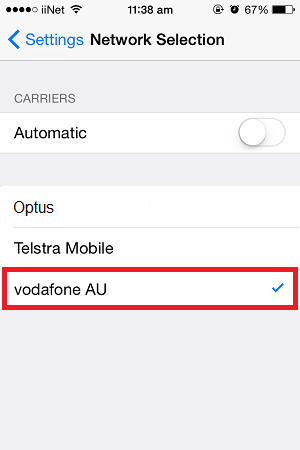
- Turn off the Automatic switch, then wait while your iPhone searches for available networks in the area.
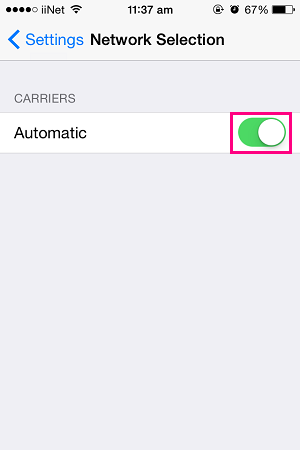
- Tap Vodafone AU, then exit the Settings app to finish.
How to set the network carrier on Android OS
Android OS looks different depending on your phone and software version. If these steps don't work for you, please check the manufacturer's website for a guide.
- Open the Settings app.
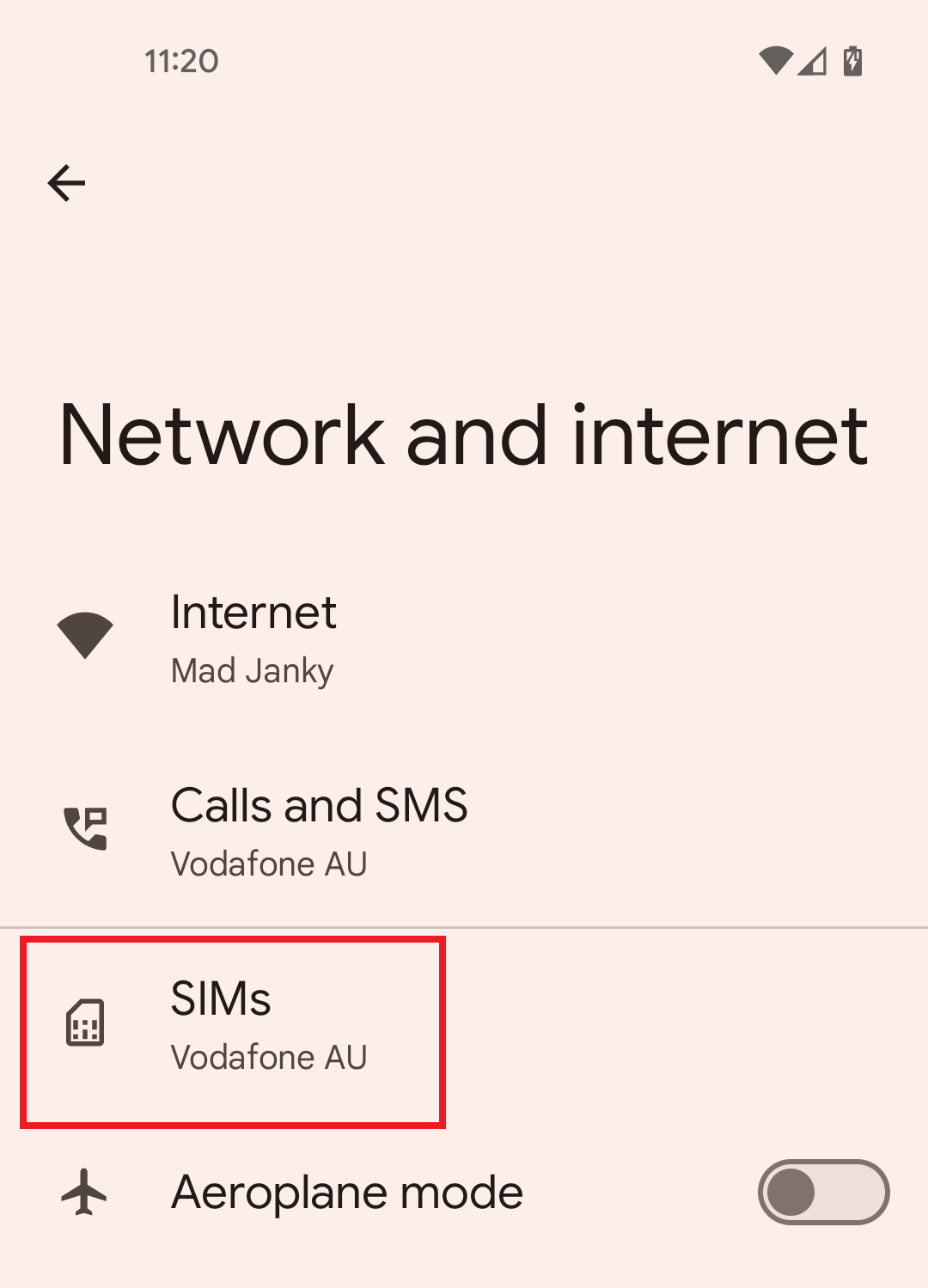
- Tap Network and Internet.
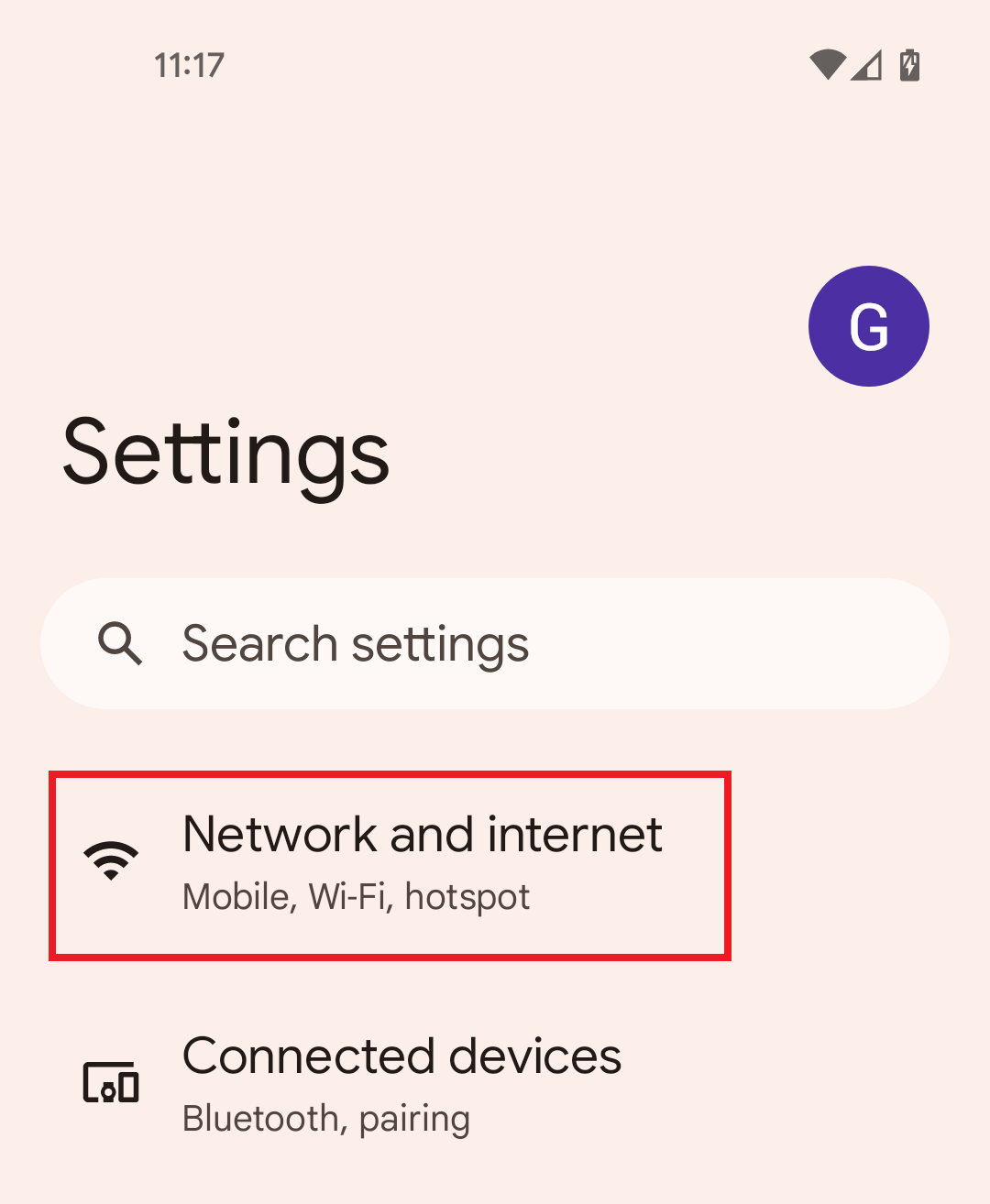
- Tap SIMs, then select your iiNet SIM.
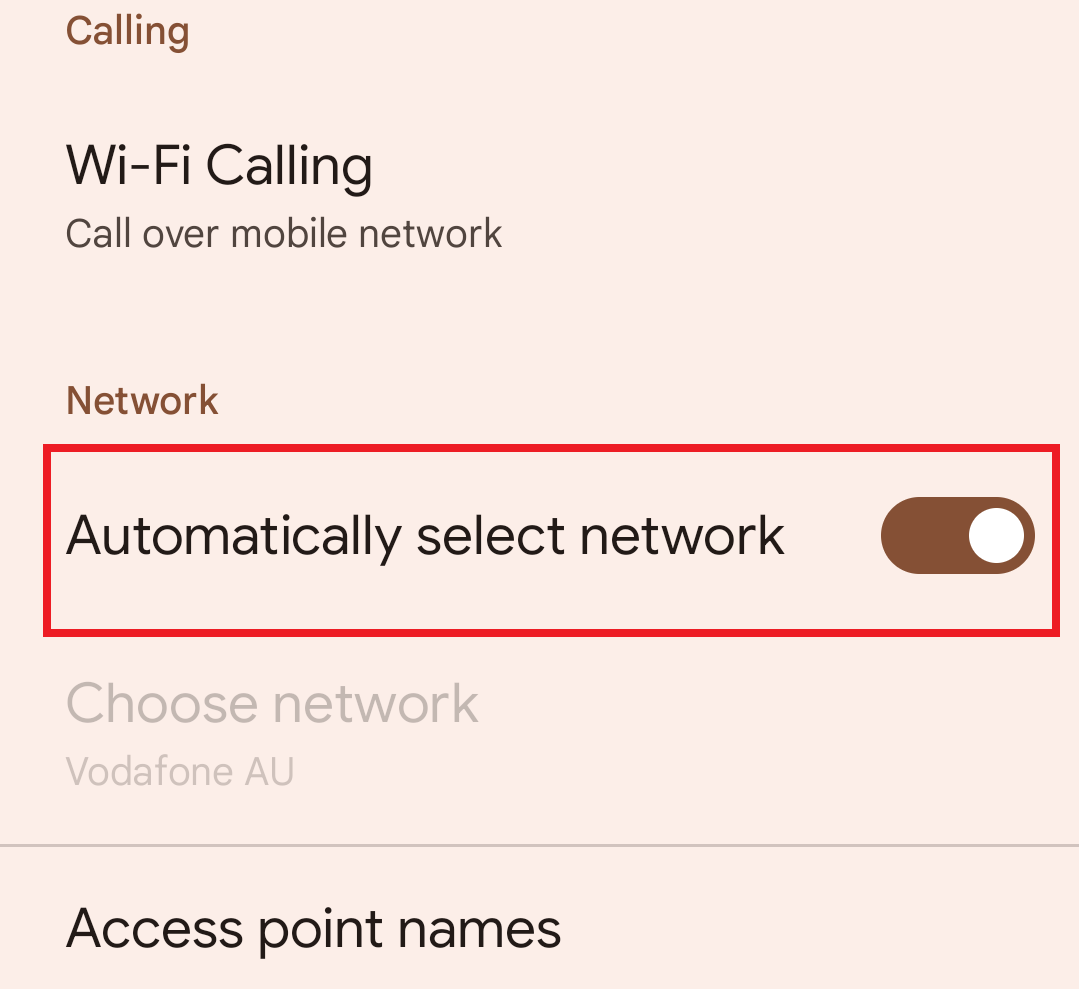
- Scroll down and turn off the Automatically select network switch, then wait while your phone searches for available networks in the area.
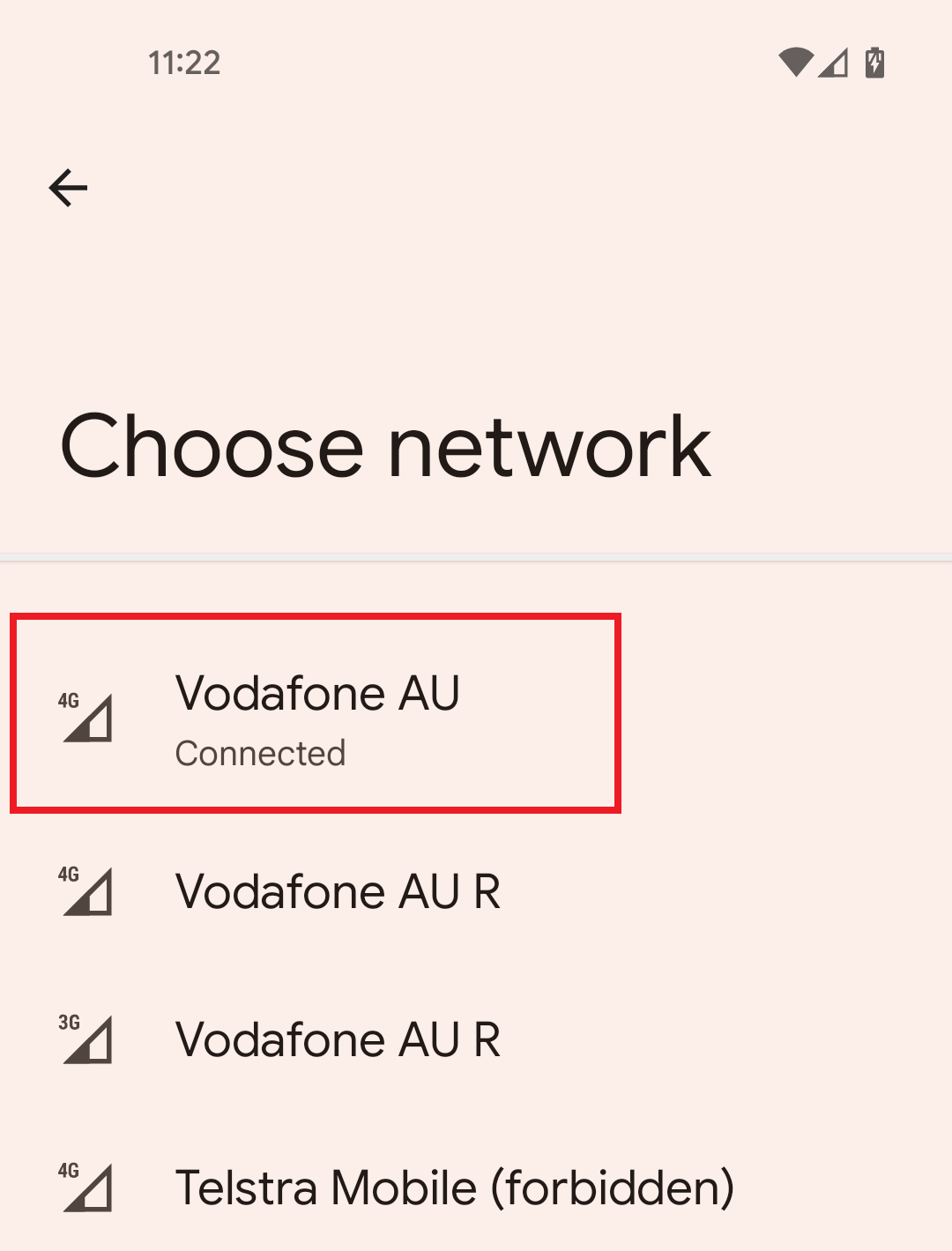
- Tap Vodafone AU, then exit the Settings app to finish.
If there's no communication betwen your modem and your device, then you won't be able to view websites or browse to your modem's default gateway. These steps will help identify the issue.
- Make sure your computer is connected to your modem by Ethernet cable or Wi-Fi.
Wi-Fi connections can't be over Guest Wi-Fi or Wi-Fi Protected Setup (WPS). - Turn off your modem and your device and leave them off for at least 60 seconds.
- Turn them back on and wait for them to reboot. When you modem's Internet light is back on, try to browse to your modem’s default gateway.
- Do you have any devices connected to your modem with an Ethernet cable? If these devices can visit your modem's default gateway but devices on Wi-Fi can’t, switch to troubleshooting Wi-Fi no connection.
- Do you have multiple devices to test? If some devices can get to your modem's default gateway but others can't, the devices that can't may be faulty.
Faulty devices with a faulty wireless adapter may need to be repaired or replaced. If the device is a computer running Windows, a winsock reset may help. - Still can't get to your modem's default gateway? Call us on 13 22 58 and we'll help you.
In most cases, your computer will obtain DNS settings automatically and you won't need to set it manually. Sometimes DNS may need to be set manually if you're experiencing browsing issues.
Select one of the links below to jump to a query:
Set DNS server in Windows
- Log in to Windows with an Administrator account.
If your account doesn’t have Administrator privileges, you can't change your DNS server settings. - Hit Search and search for "Control Panel".
- Open the Control Panel app and select Network and Sharing Centre.
You may need to hit Network and Internet before you see Network and Sharing Centre.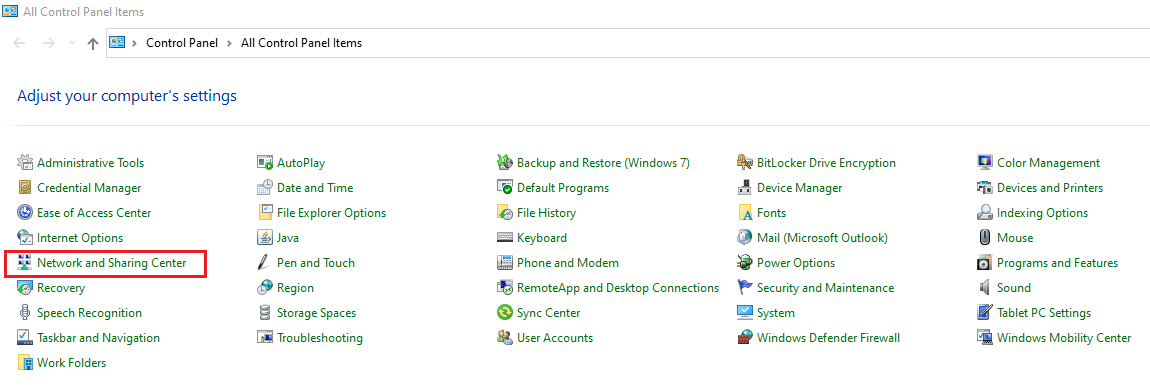
- Hit Change adapter settings.
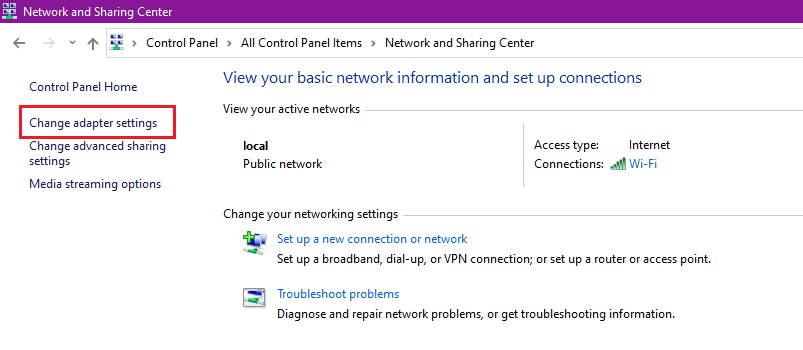
- Right-click on your active internet connection and select Properties.
Your active internet connection may be Ethernet, Wireless Network Connection or Local Area Connection depending on how your computer is set up.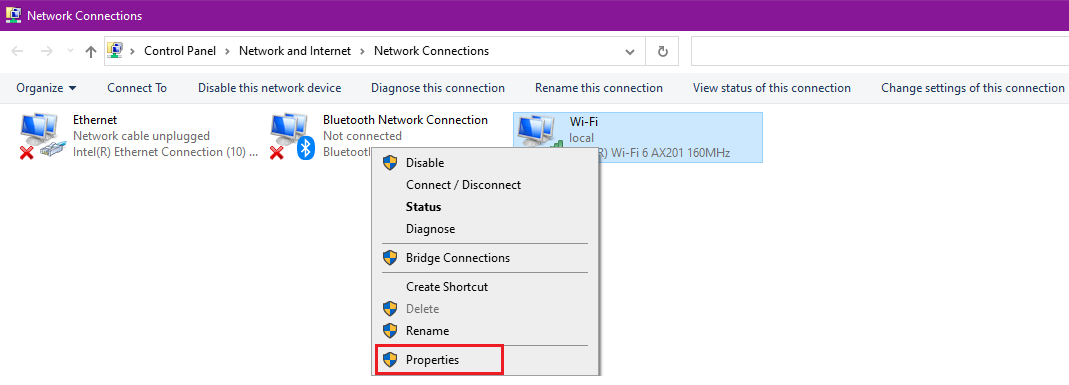
- In the Networking tab, select Internet Protocol (TCP/IP), then hit Properties.
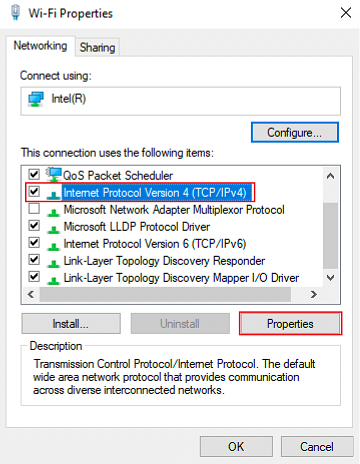
- Select Use the following DNS server addresses and enter these settings:
Preferred DNS server: 203.0.178.191
Alternate DNS server: 203.215.29.191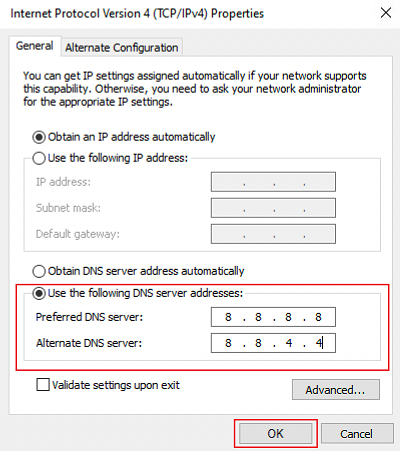
- Hit OK to finish.
Set DNS server in macOS
- Hit the Apple icon in the top right-hand corner and select System Preferences.
- Select Network.
- Select your connected network (Ethernet or Wi-Fi) and then hit Advanced.
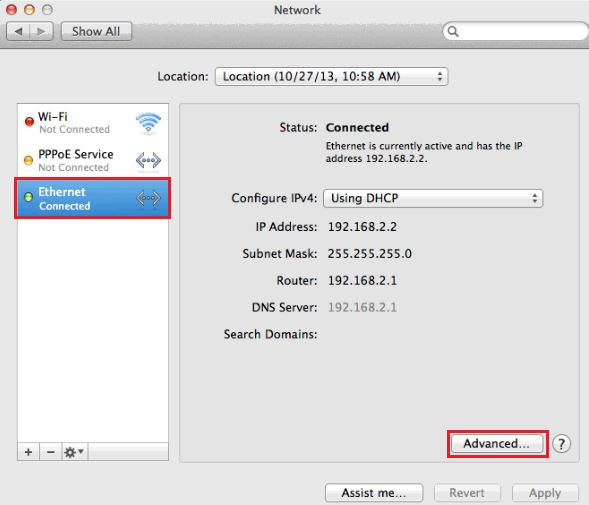
- Select the DNS tab and then click the plus (+) icon in the lower left-hand corner.
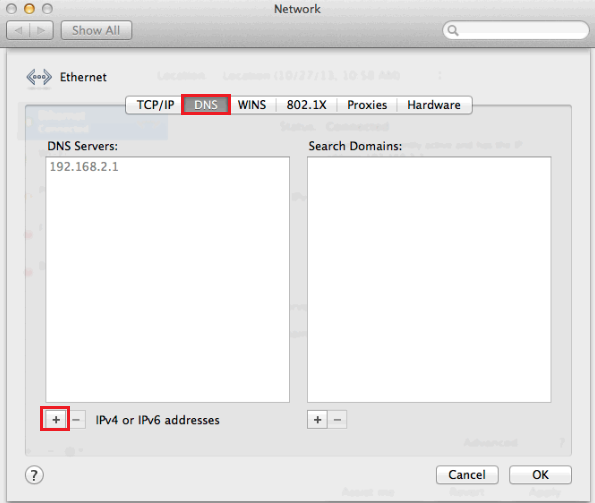
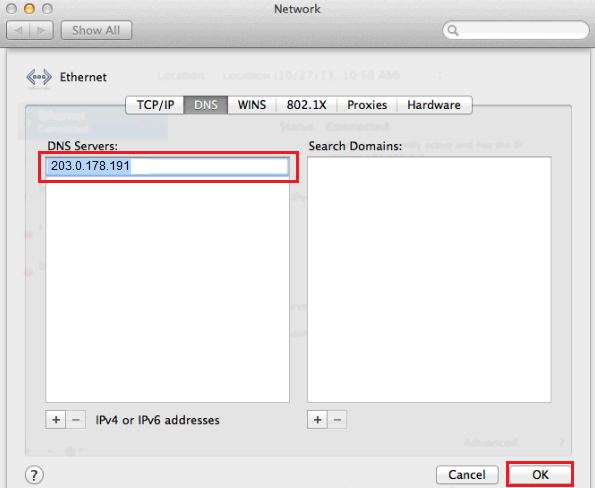
- For DNS Servers, enter "203.0.178.191" and then hit OK to finish.
A TCP/IP reset can fix some browsing issues, particularly if your modem's default gateway address is starting with “169.254”.
Select one of the links below to jump to a query:
TCP/IP Reset in Windows
- Hit Search and type "cmd" into the search bar.
- Right-click on the Command Prompt app and select Run as administrator.
You may need to enter an administrator password before you can continue.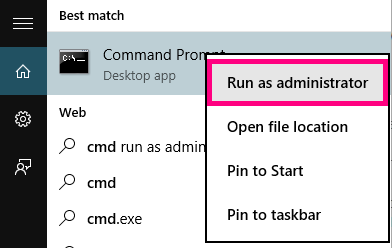
- Type “netsh int ip reset” and then hit Enter on your keyboard.
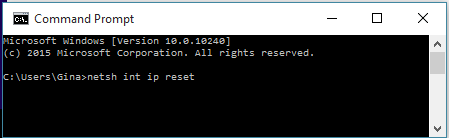
- Once the reset is complete, restart your computer to finish.
TCP/IP Reset in macOS
- Hit the Apple icon in the top right-hand corner and select System Preferences.
- Select Network.
- Select your connected network (Ethernet or Wi-Fi) and then hit Advanced.
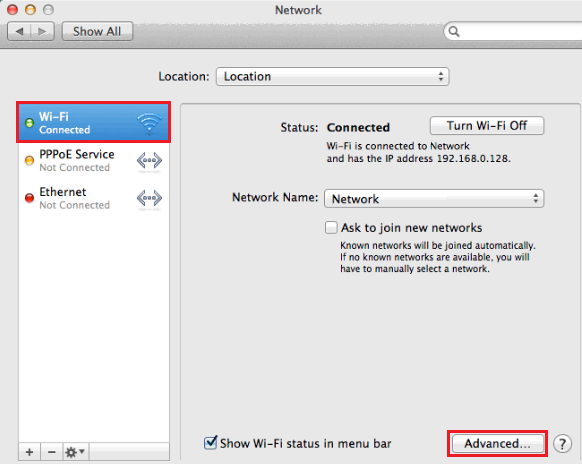
- Select the TCP/IP tab and then hit Renew DHCP Lease.
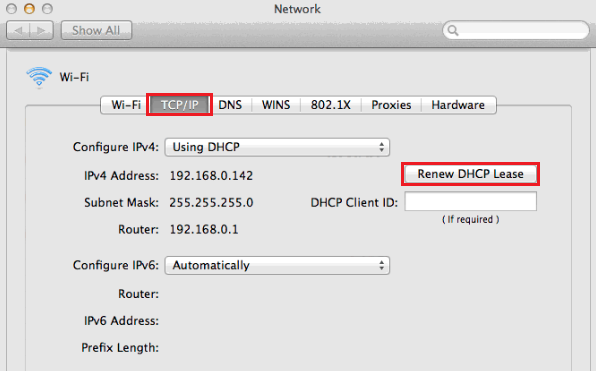
- Click OK to finish.
Every modem has a default gateway, which is a web page where you can log in and change your modem settings. You'll find the default gateway address on your modem's barcode sticker, but if it's not working, then these steps can help you find the default gateway or identify the issue.
Common default gateway addresses include 192.168.0.1, 192.168.1.1, 192.168.20.1, and 10.1.1.1.
Select one of the links below to jump to a query:
Find the Default Gateway on Windows
- Make sure your computer is connected to your modem by Ethernet cable or Wi-Fi.
Wi-Fi connections can't be over Guest Wi-Fi or Wi-Fi Protected Setup (WPS). - Hit Search and type "cmd" into the search bar, then open the Command Prompt app.
- Type “ipconfig” and then hit Enter on your keyboard.
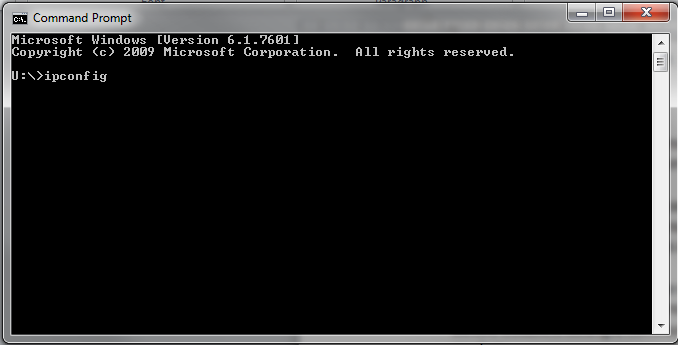
- Scroll through the test results. If your computer is connected to your modem by Ethernet cable, look for a heading that says Ethernet adapter Local Area Connection.
If you're on Wi-Fi, look for Wireless LAN Local Area Connection.
Ignore any results that say “Media Disconnected” - these are saved settings for adapters that aren't currently being used. - Default Gateway, e.g. "192.168.0.1" means your default gateway address is "http://192.168.0.1".
Important: If the default gateway begins with “169.254”, then your modem isn't getting a response from the DHCP server. You should reset your TCP/IP settings and if the issue persists, reset your network adapter.
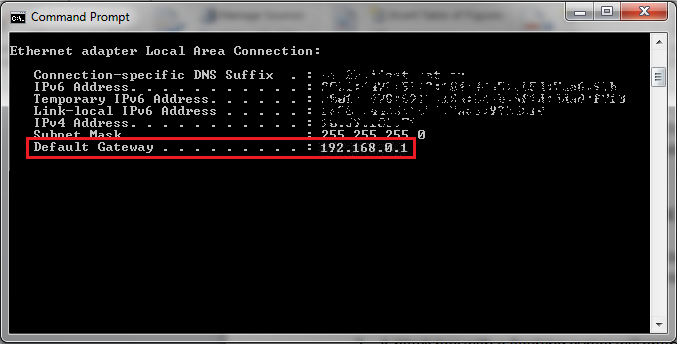
- Open your web browser and go to your default gateway address. You should see a login page - you can find the default username and/or password on your modem's barcode sticker. If you have custom login details, you'll need to use those instead.
Don't see a login page? Check out Troubleshoot no communication between your modem and device.
Forgotten your custom login details? You'll need to factory reset your modem and set it up again.
Find the Default Gateway on macOS
- Make sure your computer is connected to your modem by Ethernet cable or Wi-Fi.
Wi-Fi connections can't be over Guest Wi-Fi or Wi-Fi Protected Setup (WPS). - Hit the Apple icon in the top left-hand corner and choose System Preferences.
- Select Network.
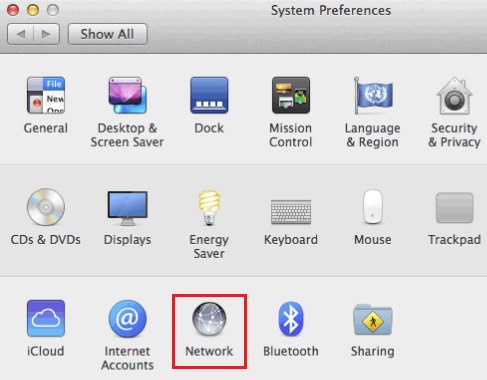
- Select your Connected internet connection from the left-hand column. This may be the Ethernet section if you're connected via Ethernet cable, or the Wi-Fi section if you're connected via Wi-Fi.
- If your computer is connected to your modem by Ethernet cable, select Ethernet and your default gateway address will be listed next to Router, e.g. "192.168.2.1" means your default gateway address is "http://192.168.2.1".
If you're on Wi-Fi, select Wi-Fi, then hit Advanced and select TCP/IP. Your default gateway address will be listed next to Router, e.g. "192.168.2.1" means your default gateway address is "http://192.168.2.1".
Important: If the default gateway begins with “169.254”, then your modem isn't getting a response from the DHCP server. You should reset your TCP/IP settings and if the issue persists, restart Wi-Fi/Airport.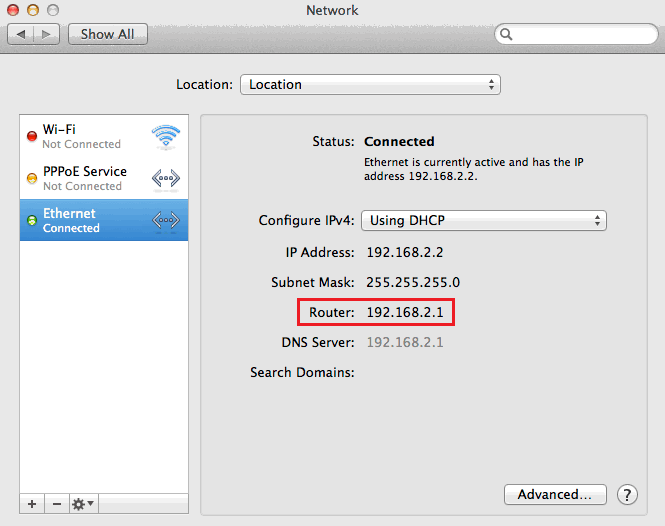
- Open your web browser and go to your default gateway address. You should see a login page - you can find the default username and/or password on your modem's barcode sticker. If you have custom login details, you'll need to use those instead.
Don't see a login page? Check out Troubleshoot no communication between your modem and device.
Forgotten your custom login details? You'll need to factory reset your modem and set it up again.
A ping test checks how data packets are sent to a specific address using your internet connection, including how long it took and whether any packets were lost.
If you use PingPlotter, it will run a ping test and a traceroute at the same time.
Select one of the links below to jump to a query:
- Common addresses to ping
- PingPlotter on Windows
- PingPlotter on macOS
- PingPlotter on iOS (iPhone/iPad)
- Ping test in Windows
- Ping test in macOS
- Understanding ping test results
Common addresses to ping
| Address to ping | What is it? | Why ping it? |
|---|---|---|
| iinet.net.au | iiNet’s web address | To check that DNS is working on your computer. |
| 203.0.178.191 | One of iiNet’s DNS servers | To check that TCP/IP settings are working on your computer. |
| 127.0.0.1 | A loopback test to your own computer | To check that there’s no issue with your computer’s network adapter or connection settings. |
PingPlotter on Windows
- Download PingPlotter at: http://pingplotter.com/download
You don't need to buy a subscription, you can use the Free version. - Open PingPlotter and hit the + (plus) icon to open a New Trace tab.
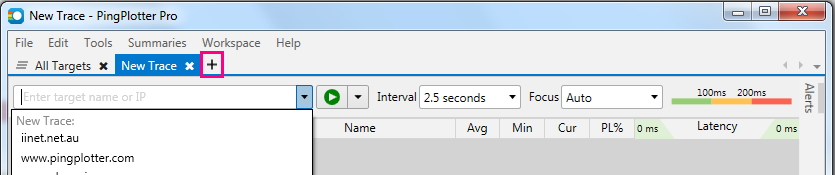
- Type iinet.net.au or another address you want to to ping or traceroute, then hit Start.

- Let the test run for at least 60 seconds, then hit Pause.
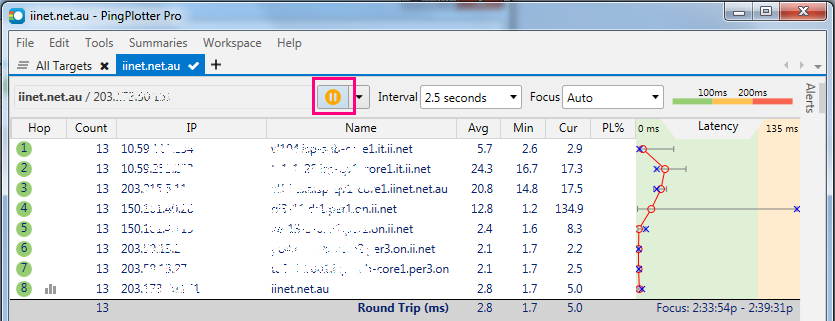
- Hit the Print Screen (PrntScr) key on your keyboard to screenshot your test results. You can use CTRL+V to paste your screenshot into any text editor, image editor or email app.
PingPlotter on macOS
- Download PingPlotter at: http://pingplotter.com/download
You don't need to buy a subscription, you can use the Free version. - Open PingPlotter and type iinet.net.au or another address you want to ping or traceroute, then hit the Start.
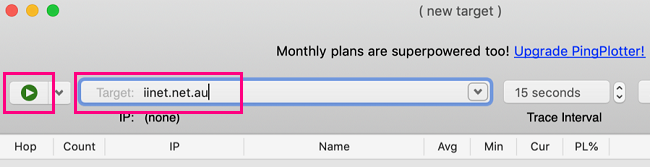
- Let the test run for at least 60 seconds, then hit Pause.
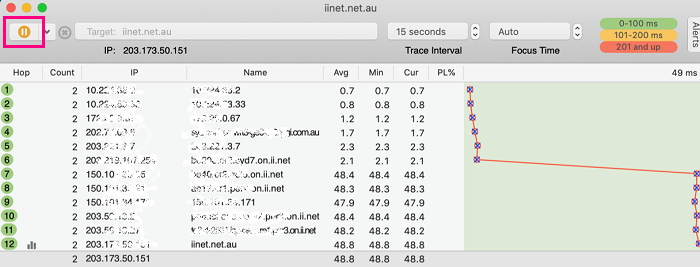
- Use the Command ⌘+Shift+3 keys on your keyboard to screenshot your test results. You can use Command ⌘+V to paste your screenshot into any text editor, image editor or email app.
PingPlotter on iOS (iPhone/iPad)
- Open the App Store and search for 'PingPlotter" to install PingPlotter.
You don't need to buy a subscription, you can use the Free version.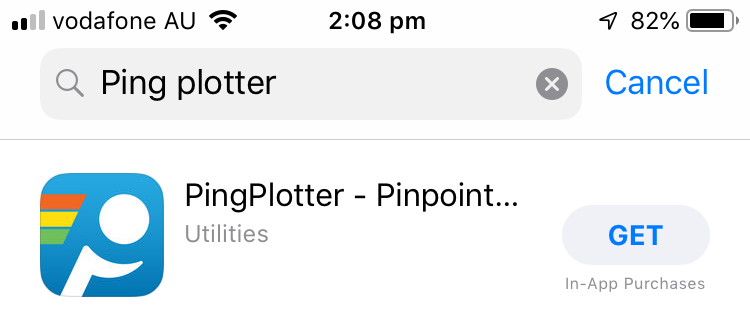
- Open PingPlotter and type iinet.net.au or another address you want to ping or traceroute, then hit Start.
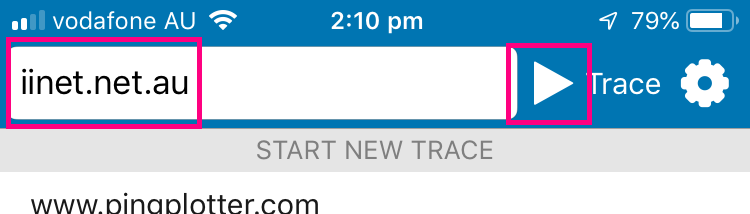
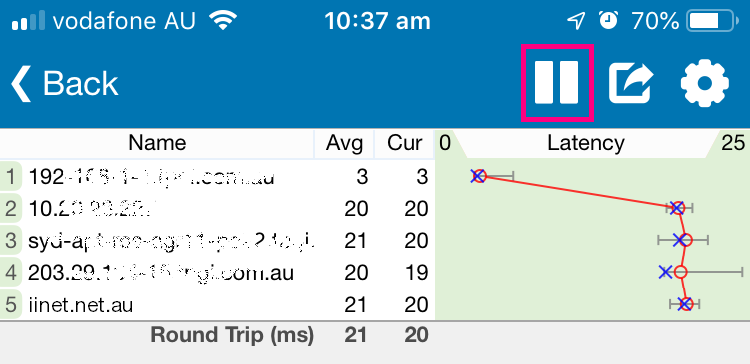
- Let the test run for at least 60 seconds, then hit Pause.
- Hit the Share icon and select Screenshot.
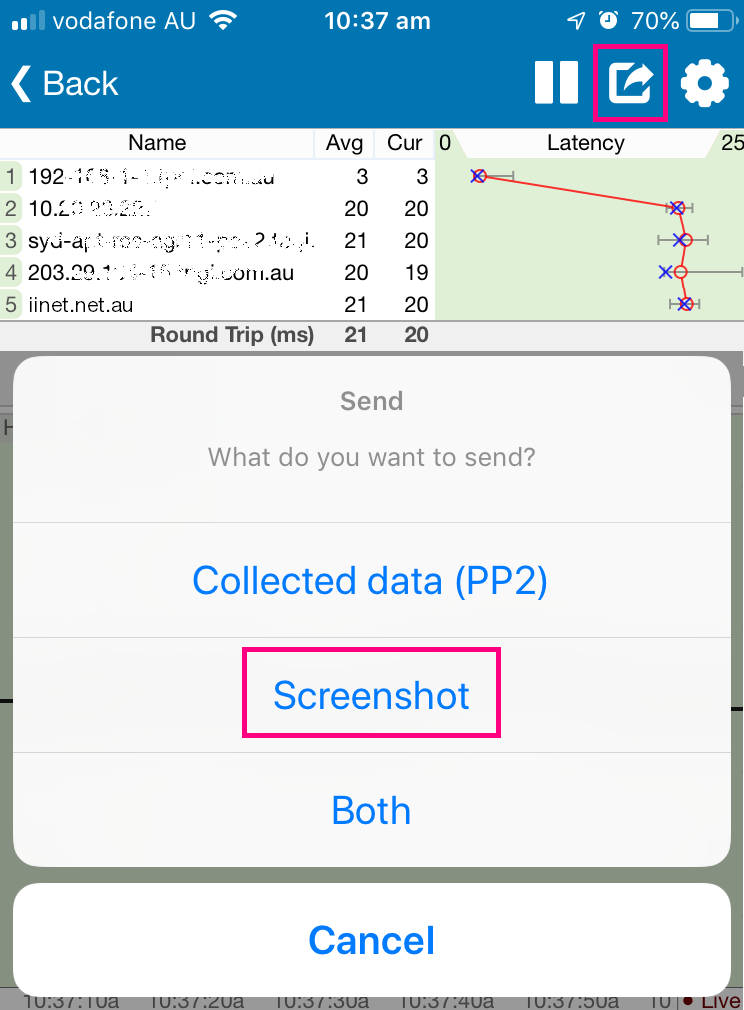
- You can choose to save your screenshot to Pictures, or share it by Mail.
Ping test in Windows
- Hit Search and type "cmd" into the search bar.
- Open the Command Prompt app.
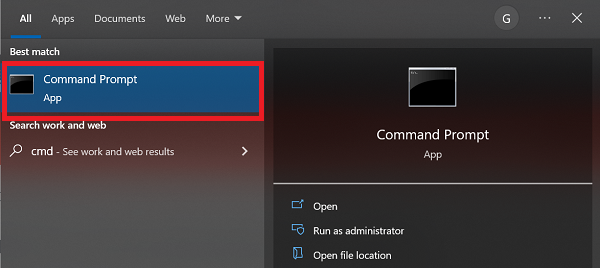
- Type “ping” then hit Space on your keyboard.
- Type the address you want to ping, e.g. "ping iinet.net.au" then hit Enter on your keyboard.
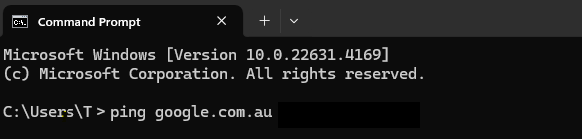
- Wait for the ping results.
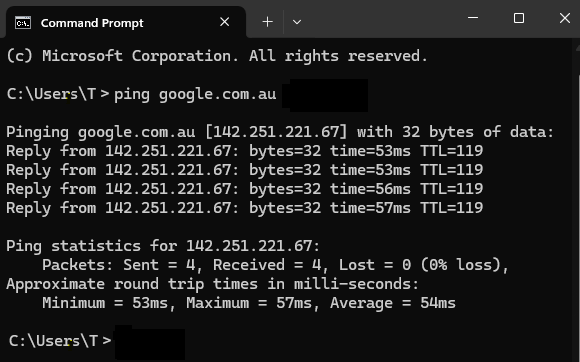
If a ping test fails, you'll get a "Request timed out", "Destination host unreachable", or "Transmit failed, error code #" messge instead of ping results. You may need to troubleshoot your internet if a ping test fails.
With some browsing issues, you may be able to ping a DNS server, but not a web address. If this is the case, you should try manually setting your DNS server. - To copy-paste your ping results: Highlight the text results and simply press the Enter key.
Note: For Windows 10, right-click in the Command Prompt window and select Mark to turn on the cursor. You can use the up/down arrow keys on your keyboard to move the cursor to the start of the text you want to copy.
Hold the Shift key and use the down/right arrow keys to highlight the text you want to copy, then hit the Enter key to copy the text.
Open Word, Notepad or any other text editor or email app and use CTRL+V to paste the copied text.
Ping test in macOS
- Hit Search and type “network utility” in the search bar.
- Open the Network Utility app.
You can also find this app at /System/Library/CoreServices/Applications.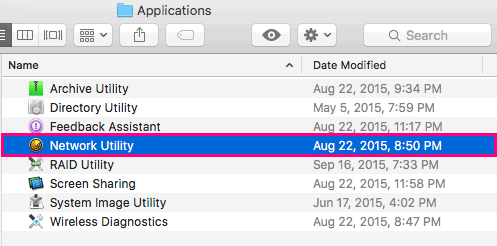
- Select the Ping tab and type the address you want to ping, , e.g. "google.com", then hit Ping.
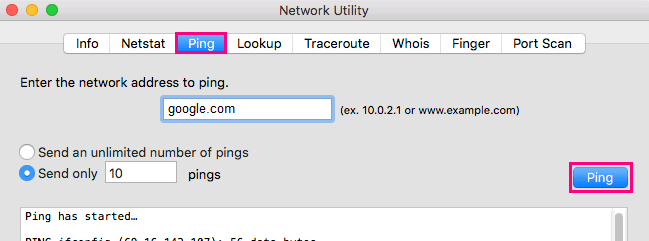
- Wait for the ping results.
If a ping test fails, you'll get a "Request timed out", "Destination host unreachable", or "Transmit failed, error code #" messge instead of ping results. You may need to troubleshoot your internet if a ping test fails.
With some browsing issues, you may be able to ping a DNS server, but not a web address. If this is the case, you should try manually setting your DNS server. - To copy-paste your ping results: Click and drag the cursor to select the text you want to copy, then right-click and select Copy, or hit Command ⌘+C on your keyboard.
Open TextEdit or any other text editor or email app and use Command ⌘+V to paste the copied text.
Understanding ping test results
Ping test results look similar in both Windows and Mac OS.
- If a ping test is successful, it means that your computer was able to connect to that address.
- You’ll see a "reply" listed for each data packet sent in the ping test, and how long it took, e.g:
"Pinging google.com.au [142.251.221.67] with 32 bytes of data:
Reply from 142.251.221.67: bytes=32 time=53ms TTL=119
Reply from 142.251.221.67: bytes=32 time=53ms TTL=119
Reply from 142.251.221.67: bytes=32 time=56ms TTL=119
Reply from 142.251.221.67: bytes=32 time=57ms TTL=119"
A Windows ping test will typically send 4 packets; a macOS ping test may send more.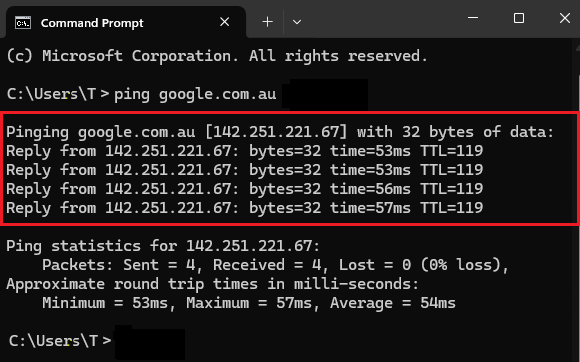
- The statistics will show if any data packets were lost during the ping test, e.g:
"Ping statistics for 142.251.221.67:
Packets: Sent = 4, Received = 4, Lost = 0 (0% Loss)
Approximate round trip times in milli-seconds:
Minimum = 53ms, Maximum = 57ms, Average = 54ms".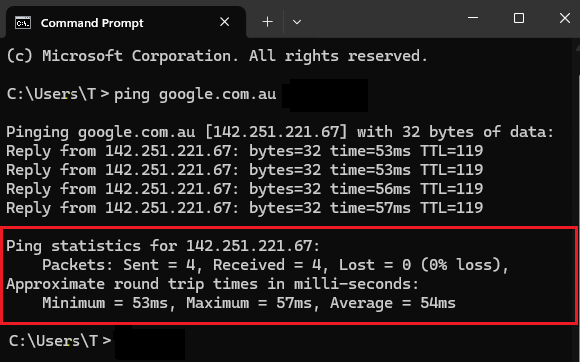
"Connect Outstanding" means your iiNet order is blocked because there's already an active phone or internet service at your address.
To get the service transferred from the previous owner, we'll need you to send us Proof of Occupancy.
Can't provide Proof of Occupancy? This could result in connection delays, or we may be unable to complete your order. Please call us on 13 22 58 to discuss your options.
- Scan or take a photo of one the following Proof of Occupancy documents, which must include your name and the same address as your internet order:
- A fixed utility bill (e.g. water, electricity, gas); or
- An insurance document (e.g. Business or Home & Contents); or
- A Certificate of Title of the land; or
- A Council Rates notice; or
- A signed lease/rental agreement (must include the lease start date).
- Open a new email and attach your Proof of Occupancy.
- Enter a subject line of "nbn Proof of Occupancy", followed by your iiNet account number.
You can find your iiNet account number on emails from us about your iiNet order. - In the body of the email, include your name and the address for your internet order, including the suburb and postcode.
- Send the email to: proof@iinet.net.au
Once your Proof of Occupancy is accepted, we'll proceed with your iiNet order. Most services can be activated within 48 hours.
You can get your invoices at any time from Toolbox. This includes all previous invoices if you need them for tax purposes.
- Log in to Toolbox and select Bills & Payments. If you're on a mobile device and you don't see this option, click the grey square with three lines to show the navigation menu.
Never logged into Toolbox before? Check out An Introduction to Toolbox. - Select Invoices from the Actions menu. If you're on a mobile device and you don't see the Actions menu, click the grey bar labelled Billing & Payments actions to show it.
- The first thing you’ll see is the current amount owing on your account and the date for your next payment, followed by any Outstanding Invoices.
- You’ll also have a list of all of your Past invoices. These can be viewed in your web browser as either a Text Version, or a PDF file by clicking View Invoice (PDF).
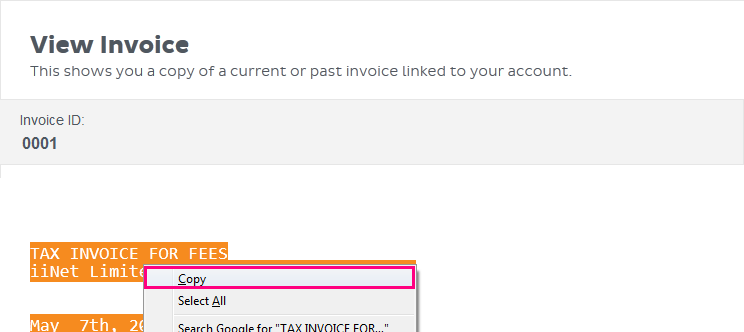
- When viewing a Text Version invoice in your browser, you can save a copy by highlighting the text with your mouse, right-clicking and selecting Copy. You can then Paste the copied text into a Word document or similar program to save it (however, PDF invoices are recommended).
- When viewing a PDF invoice in your web browser, you can save a copy by hovering your mouse near the bottom of the browser window to bring up a panel of buttons and then select the Save icon.

Here's what you need to know about the different types of SIMs available for iiNet Mobile, and how to order a replacement SIM.
Select one of the links below to jump to a query:
Lost or stolen phones
If your phone, tablet or other mobile device has been lost or stolen, please call us on 13 22 58 and we can help you with IMEI Blocking and a replacement SIM.
Ordering a replacement SIM
If you have a new handset that needs a new SIM, you have the following options:
- Physical SIM - Call us on 13 22 58 to order a new physical SIM for $10 (price includes delivery).
- eSIM - If you have an eSIM compatible device then you can log in to Toolbox and select eSIM Swap to order a new eSIM. No fees apply. Learn more.
Which physical SIM sizes are available?
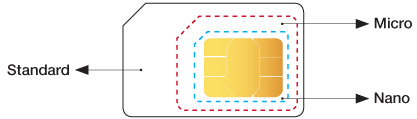
When a physical SIM is ordered, we supply a triple-cut Standard/Micro/Nano SIM so you can pop out the size you need.
Not sure which SIM size you need? Check the manufacturer's website for your phone's tech specs.