You can transfer ownership of your iiNet account to another person if they agree to become the account holder and be responsbile for paying for the iiNet account, including any outstanding charges from the before the date they took ownership.
You and the new account owner are are responsible for settling any amounts you owe each other between yourselves. We won't mediate in any way; we will only send invoices to the new account holder. If you're not comfortable with this, then we recommend that you do not transfer ownership and the other person can order a new service.
- To transfer ownership of your account into someone else’s name, call us on 13 22 58.
- Once you agree to the terms and conditions of the transfer, we’ll place a temporary authorisation on the account and the new owner will have 60 days to complete the transfer.
If the new owner is with you when you call, you can put them on the phone to complete the transfer. - The new owner will need to provide:
- At least two forms of accepted identification;
- Their bank account or credit/debit card details;
- Their iiNet account number, if they have one.
If the new owner doesn’t already have an iiNet account, they’ll need to pass our credit check.
Note: To transfer a number into a company name, the new owner must be an authorised signatory for the company, and they will need to provide the ABN/ACN and their drivers' licence number.
If you want to use any calls, text or data that isn't included in your iiNet mobile plan, you'll need to top up your Prepaid Balance in Toolbox.
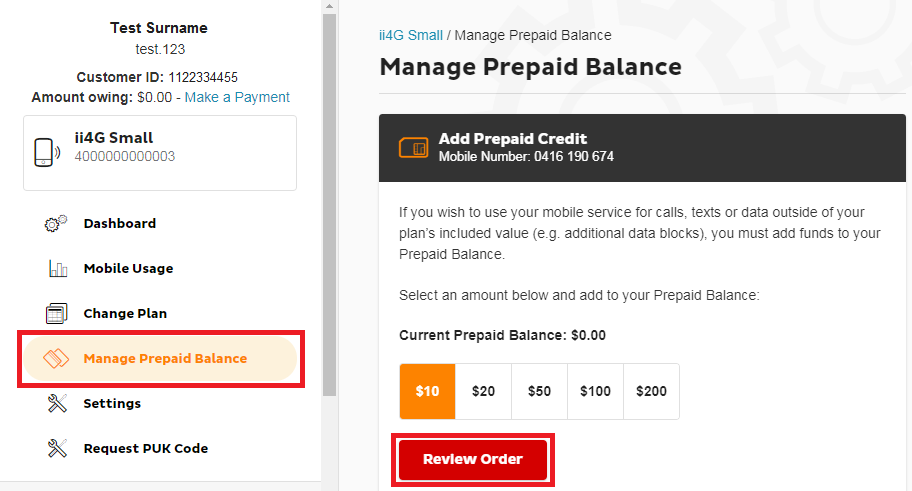
- Log in to Toolbox and hit Manage Prepaid Balance.
Never logged into Toolbox before? Check out An Introduction to Toolbox. - Select the amount to top up ($10, $20, $50, $100 or $200) and hit Review order.
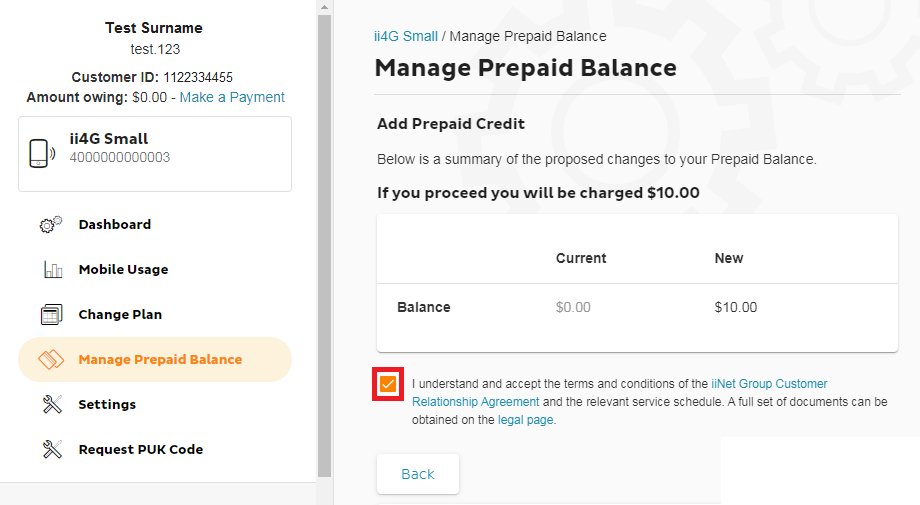
- You'll see a summary of your purchase. Use the checkbox to agree to the terms and conditions.
- Next, select your payment method. Use my existing payment method is selected by default. Hit Proceed if you wish to continue and your prepaid balance will be applied after your payment clears.
Note: Payments via direct debit may take up to 3 business days to clear. Payment via credit card is recommended for the fastest top up.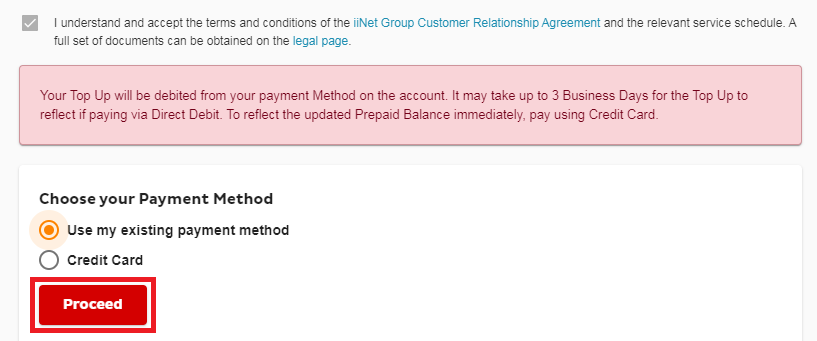
- Alternatively, select Credit Card and enter the Cardholder Name, Credit Card Name, Expiry Date and CVC to make an immediate payment via credit card. Select Make payment and your prepaid balance will be applied after your payment clears.
Note: Credit card payments typically clear within the hour. Ticking the "Save details for all future payments" box will overwrite the payment method for your regular iiNet invoices.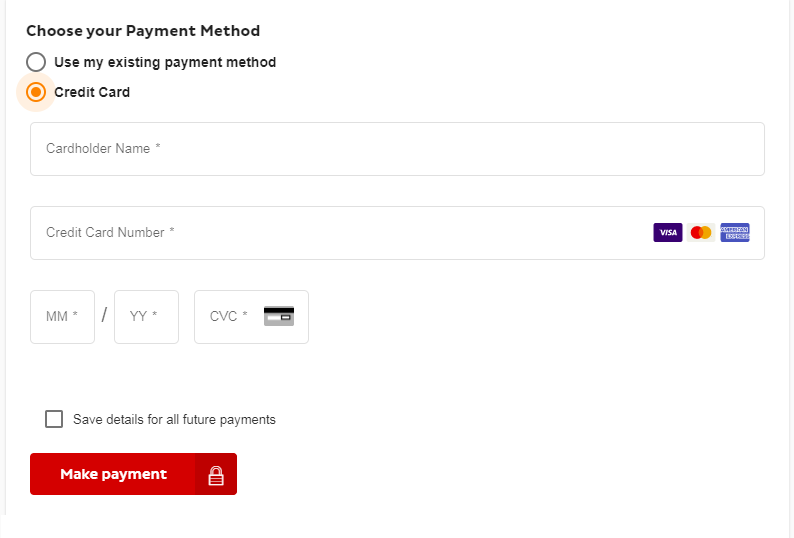
You can customise your Wi-Fi name and password in your iiNet modem settings.
Don't have an iiNet modem? Check the manufacturer's website for a guide.
Choose your modem:
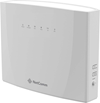

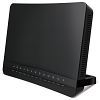
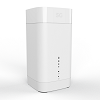
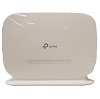
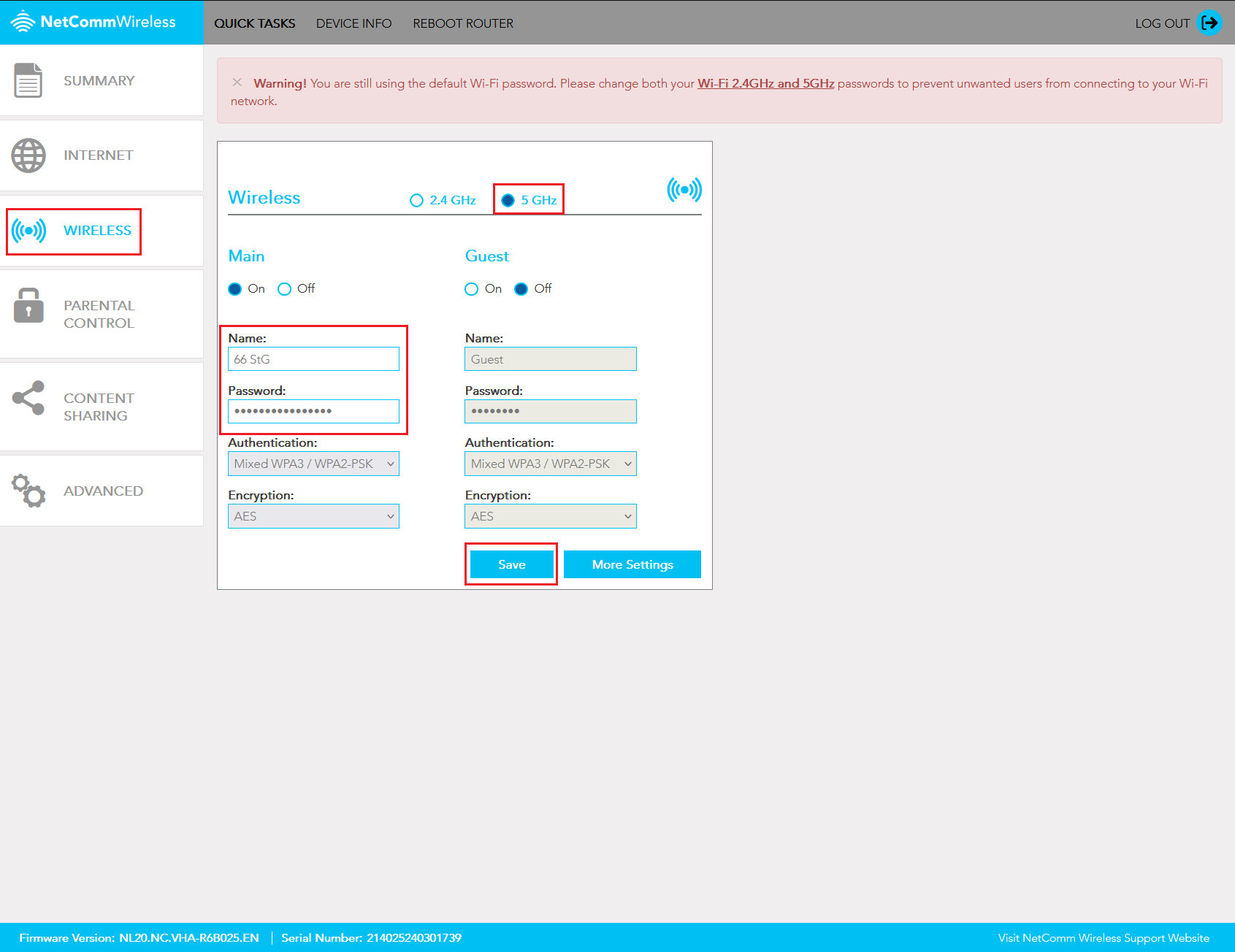
Change your Wi-Fi password on a NetComm NL20 Modem
- Open your web browser and go to: http://192.168.1.1.
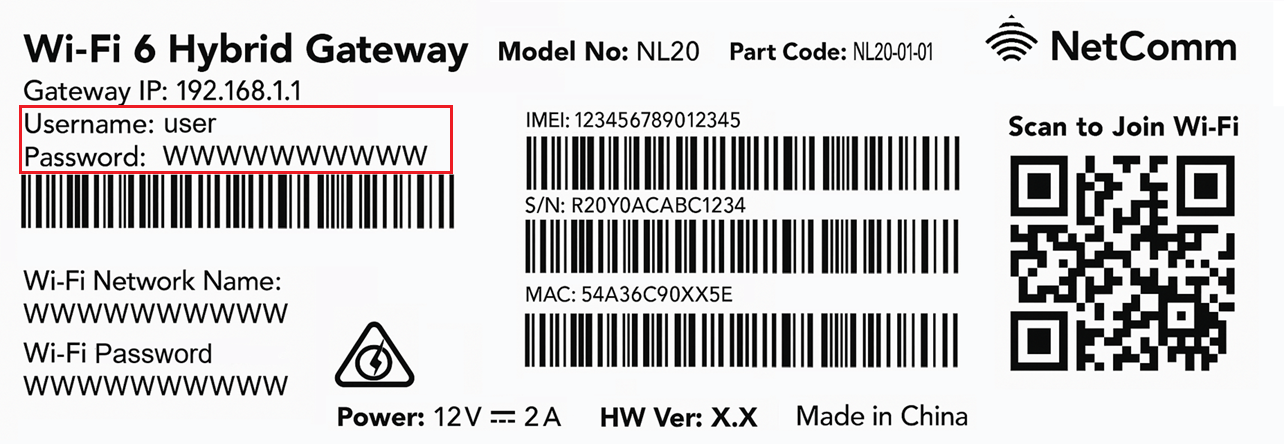
- Log in with the Username and Password found on the modem's barcode sticker or use your custom password.
- In the left pane, click Wireless.
- Select the 2.4GHz or 5GHz radio button, depending on which Wi-Fi password you'd like to change.
Important: Make sure the names and passwords match for both 2.4GHz and 5GHz – this lets devices automatically switch between networks for the best Wi-Fi signal. We recommend you use the 5GHz Wi-Fi instead of the slower 2.4GHz Wi-Fi unless your devices are too old to connect with the 5GHz Wi-Fi. - If you want to change your Wi-Fi name, type it in the Name box.
- Type your new Wi-Fi password in the Password box.
- Hit Save to finish.
Change your Wi-Fi password on a Wi-Fi Max Modem
From the My Internet Connect App
Don't want to use the app? You can change the Wi-Fi password in your web browser.
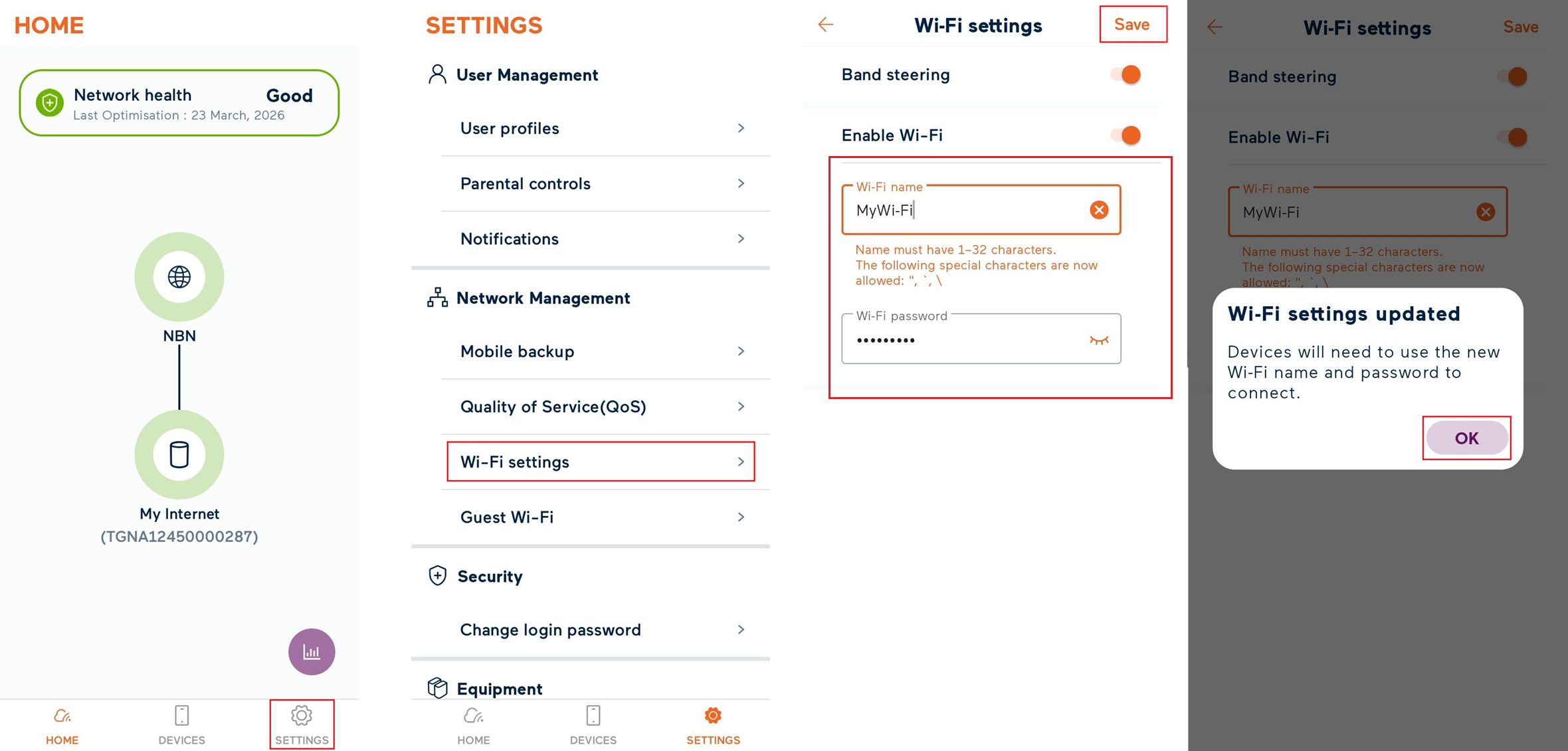
- Open the My Internet Connect App and tap Settings.
- Under Network Management, select Wi-Fi settings.
- Enter your Wi-Fi name and Wi-Fi password as desired then click Save at the top right of the screen.
Note: If Band Steering is toggled OFF, you will need to update the password for both 2.4GHz and 5GHz Wi-Fi. We recommend you use the 5GHz Wi-Fi unless your devices are too old to connect to the 5GHz network. - The app will start to update the network details. This may take 2-3 minutes to complete.
- Select Save, then reconnect your Wi-Fi devices using your new password.
Using your web browser
- Open your web browser and go to: https://192.168.1.1
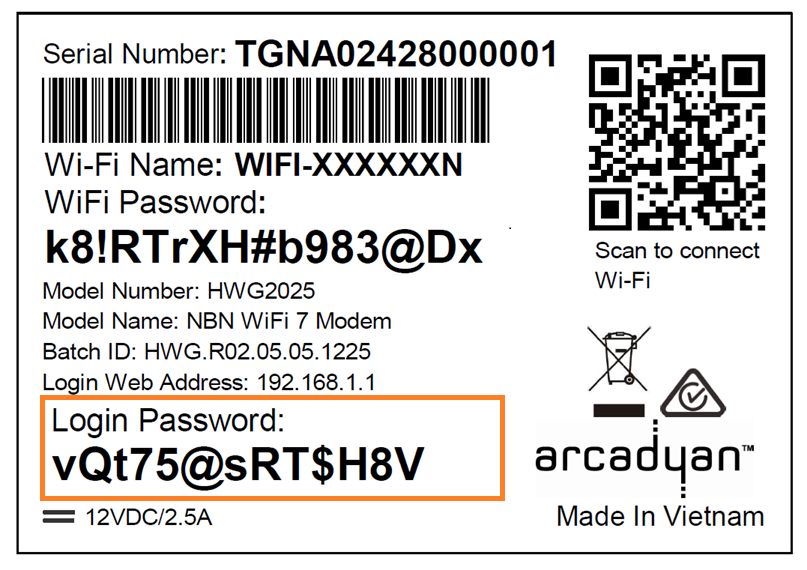
- Log in with the Login Password found on the modem's barcode sticker or use your custom password.
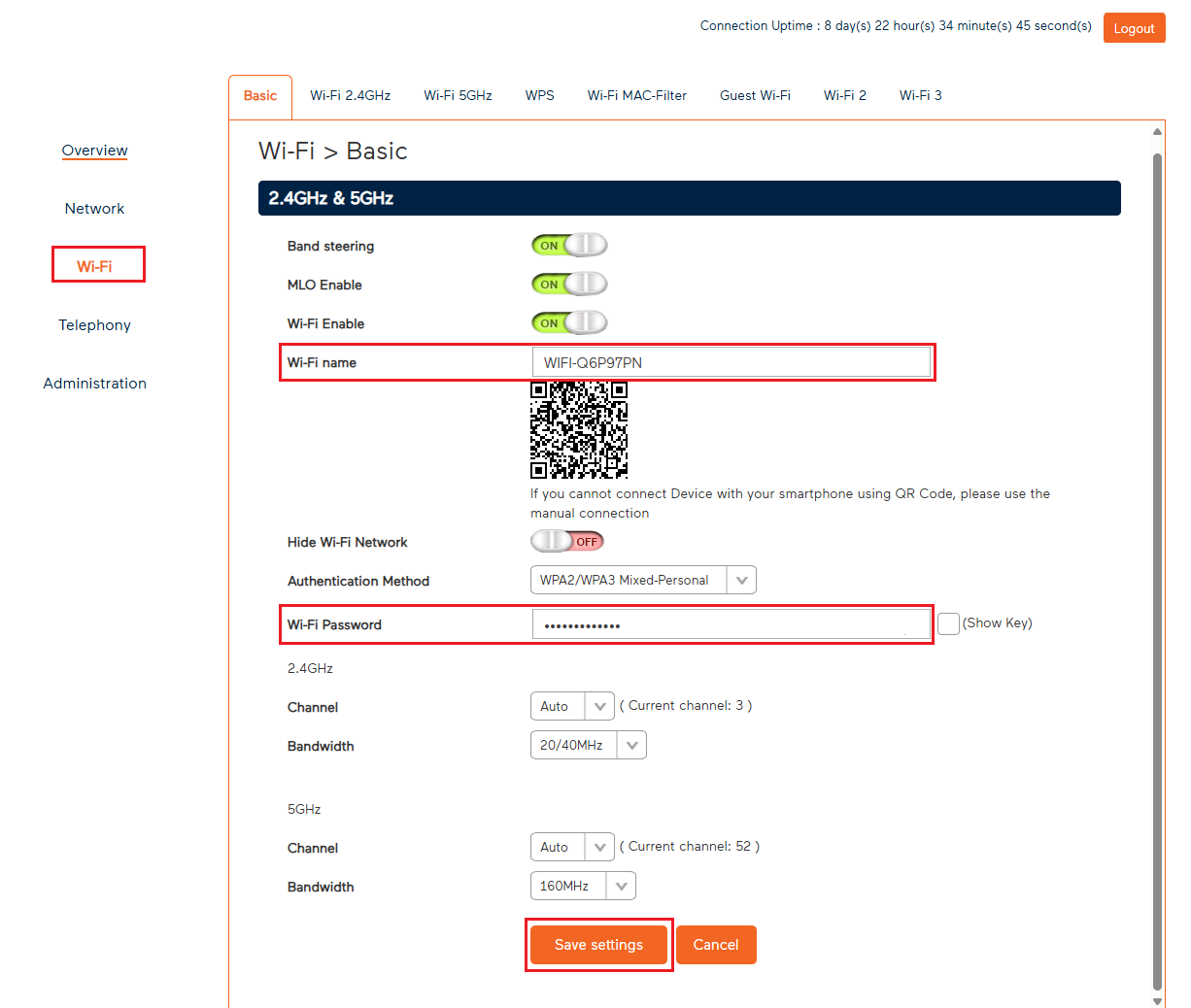
- From the left pane, click Wi-Fi.
- Under Basic, enter your desired new password in the Wi-Fi Password field.
Note: If Band Steering is toggled OFF, you will need to update the password for both 2.4GHz and 5GHz Wi-Fi. We recommend you use the 5GHz Wi-Fi unless your devices are too old to connect to the 5GHz network. - Enter your Wi-Fi name and Password as desired.
- Hit Save Settings, then reconnect your Wi-Fi devices using your new password.
Change your Wi-Fi password on a Wi-Fi Max 5G Modem
From the My Internet Connect App
Don't want to use the app? You can change the Wi-Fi password in your web browser.
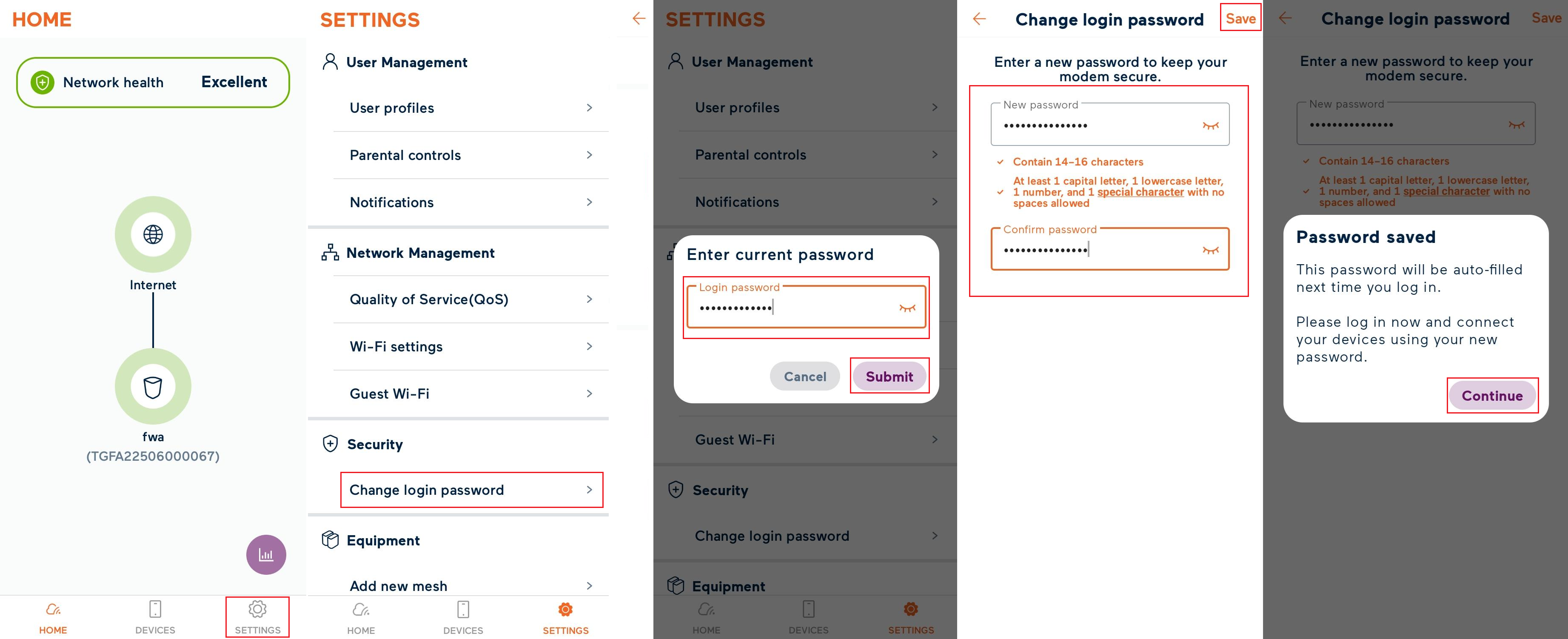
- Open the My Internet Connect App and tap Settings.
- Under Network Management, select Wi-Fi settings.
- Enter your desired Wi-Fi name and Wi-Fi password then click the Save at the top right of the screen.
Note: If Band Steering is toggled OFF, you will need to update the password for both 2.4GHz and 5GHz Wi-Fi. We recommend you use the 5GHz Wi-Fi unless your devices are too old to connect to the 5GHz network. - The app will start to update the network details. This will take 2-3 minutes to complete.
- Select Change, then reconnect your Wi-Fi devices using your new password.
Using your web browser
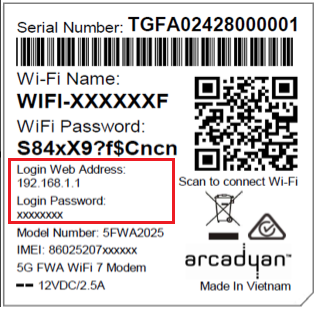
- Open your web browser and go to: https://192.168.1.1
- Log in with the Login Password found on the modem's barcode sticker or use your custom password.
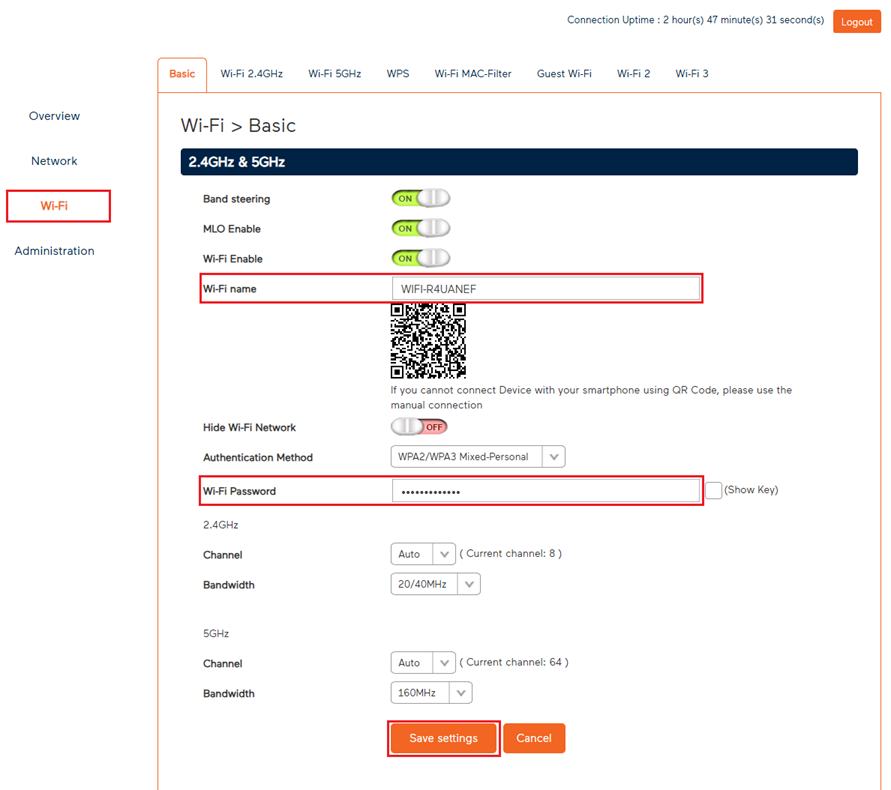
- From the left pane, click Wi-Fi.
- Under Basic, enter your desired new password in the Wi-Fi Password field.
Note: If Band Steering is toggled OFF, you will need to update the password for both 2.4GHz and 5GHz Wi-Fi. We recommend you use the 5GHz Wi-Fi unless your devices are too old to connect to the 5GHz network. - Enter your Wi-Fi name and Password as desired.
- Hit Save Settings, then reconnect your Wi-Fi devices using your new password.
Change your Wi-Fi password on a Nokia FastMile 3.2 5G Modem
Using the Nokia Wi-Fi App
Don't want to use the app? You can change the Wi-Fi password in your web browser.
- Open the Nokia Wi-Fi App.
- Select Settings.
- Under Wi-Fi Networks, select the Network Name – by default, this is NOKIA-XXXX.
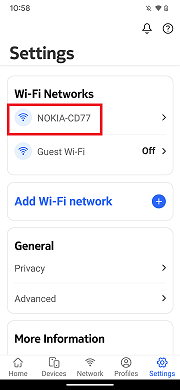
- Click the Pencil icon at the top right of the screen.
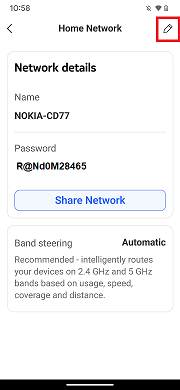
- Enter your Wi-Fi name and Password as desired then click the blue tick at the top right of the screen.
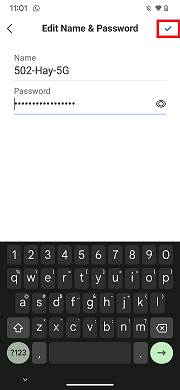
- A pop up will appear advising that you will need to connect devices to the new network name. Click Ok, got it.
- The app will start to update the network details. This will take 2-3 minutes to complete.
- Reconnect your devices with your new Wi-Fi name and/or password.
Using the Web GUI
- Open your web browser and go to: https://192.168.1.1
- Log in with your default username "admin" and the default password is on your modem's barcode sticker. If you have custom login details, use those instead.
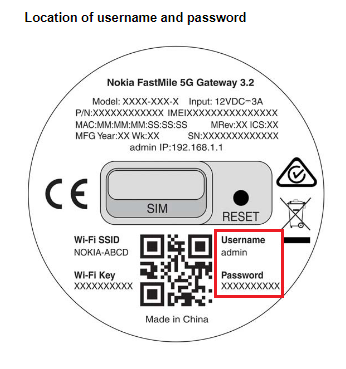
- Hit Network.
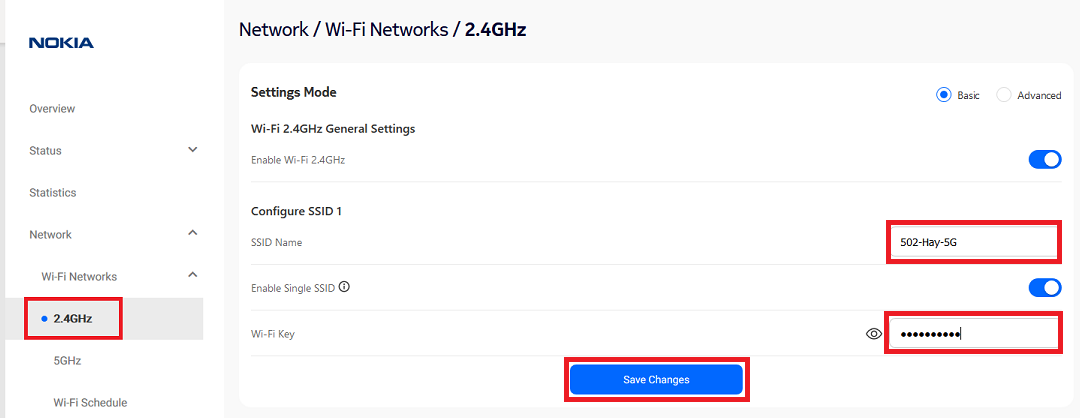
- Select Wi-Fi Networks, then 2.4GHz.
- If you want to change your Wi-Fi name, type it in the SSID Name box.
- Type your new Wi-Fi password in the Wi-Fi Key box, then hit Save Changes.
- Select 5GHz and enter your new SSID Name and/or Wi-Fi Key, then hit Save Changes.
Important: If Enable Single SSID is ON, make sure the names and passwords match for both 2.4GHz and 5GHz – this lets devices automatically switch between networks for the best Wi-Fi signal. - Reconnect your Wi-Fi devices using your new password.
Change your Wi-Fi password on a Smart Modem Gateway (VX420-G2H)
- Open your web browser and go to: https://192.168.1.1
- Log in with the default password “admin”. If you have a custom password, use that instead.
- Select Wireless.
- Type your new password in the Password box.
Note: If Band Steering is turned off, you can set different passwords for the 2.4GHz and 5GHz Wi-Fi networks. - Hit Save, then reconnect your Wi-Fi devices using your new password.
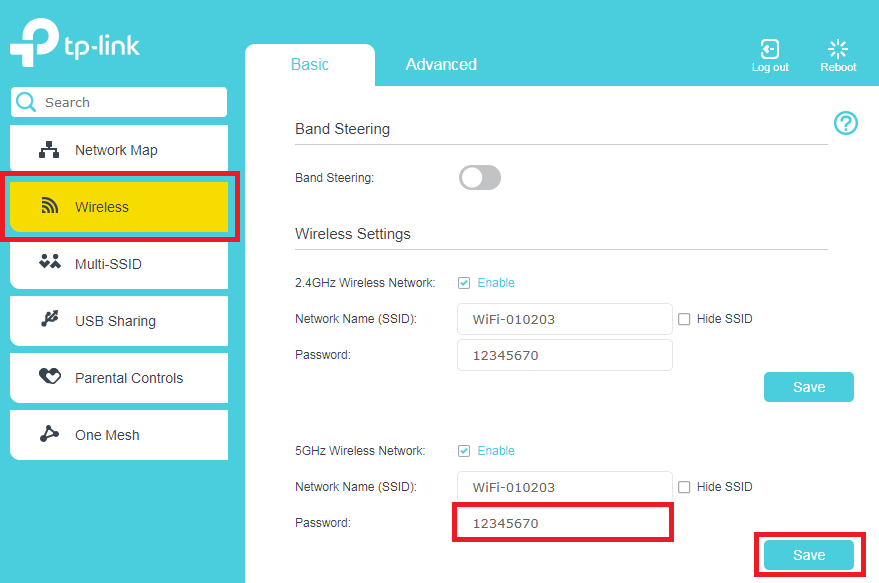
Change your Wi-Fi password on a VX220-G2V Modem
- Open your web browser and go to: https://192.168.1.1
- Log in with the default password found on your modem's barcode sticker. If you have a custom password, use that instead.
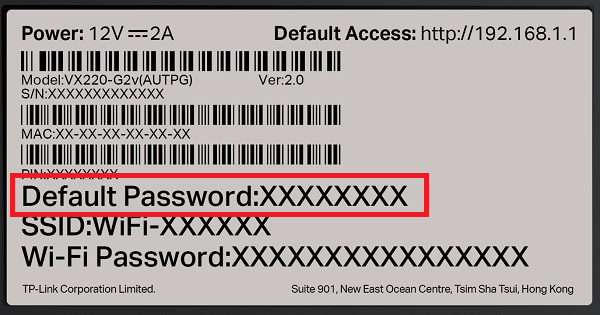
- Select Wireless.
- Type your new password in the Password box.
Note: If Band Steering is turned off, you can set different passwords for the 2.4GHz and 5GHz Wi-Fi networks. - Hit Save, then reconnect your Wi-Fi devices using your new password.
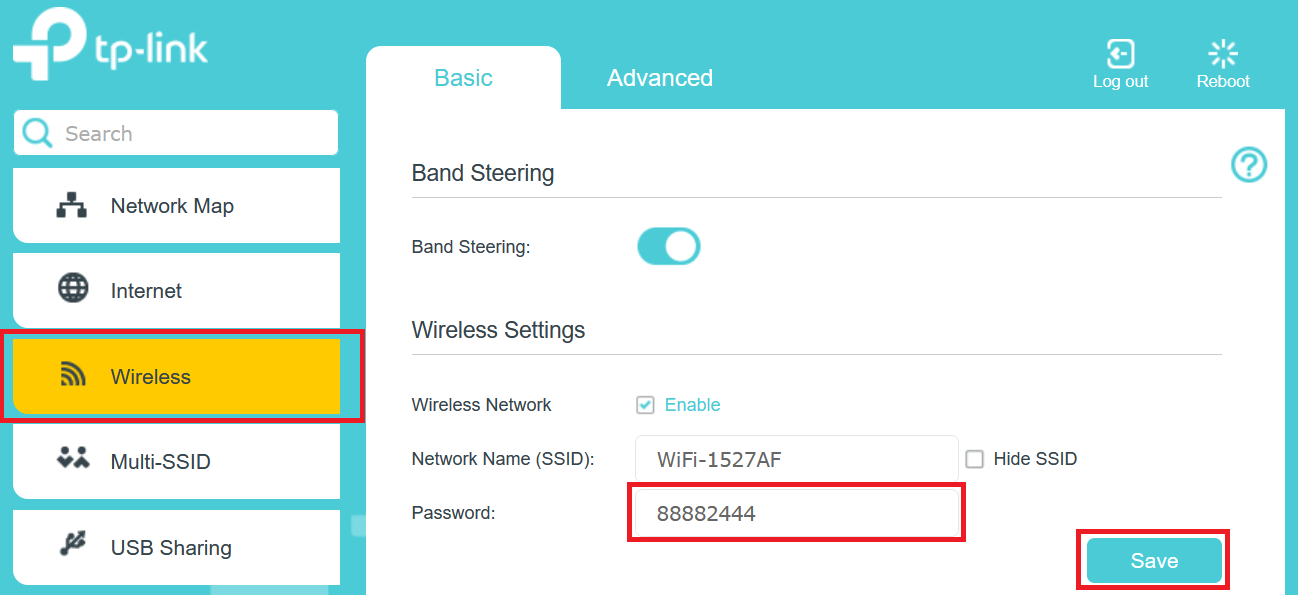
Change your Wi-Fi password on a VX420-G2V Modem
- Open your web browser and go to: https://192.168.1.1
- Log in with the default password “admin”. If you have a custom password, use that instead.
- Select Wireless.
- Type your new password in the Password box.
Note: If Band Steering is turned off, you can set different passwords for the 2.4GHz and 5GHz Wi-Fi networks. - Hit Save, then reconnect your Wi-Fi devices using your new password.
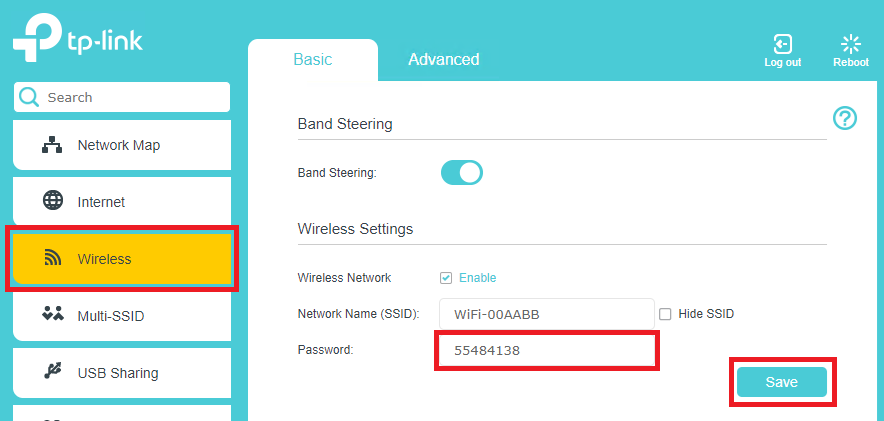
Change your Wi-Fi password on a Sagemcom 5866
- Open your web browser and go to: https://192.168.1.1
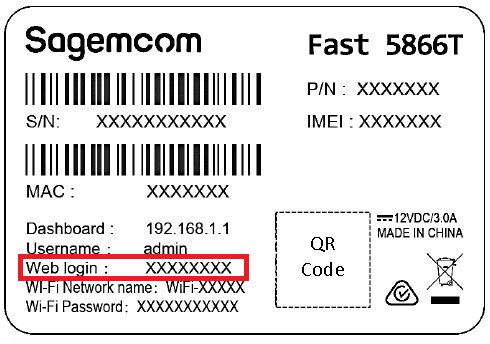
- Log in with the default username “admin” and the default password on your modem's barcode sticker. If you have custom login details, use those instead.
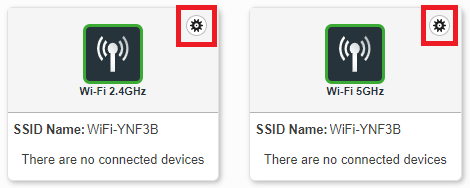
- Select the cog icon on the Wi-Fi 2.4GHz or 5GHz panel.
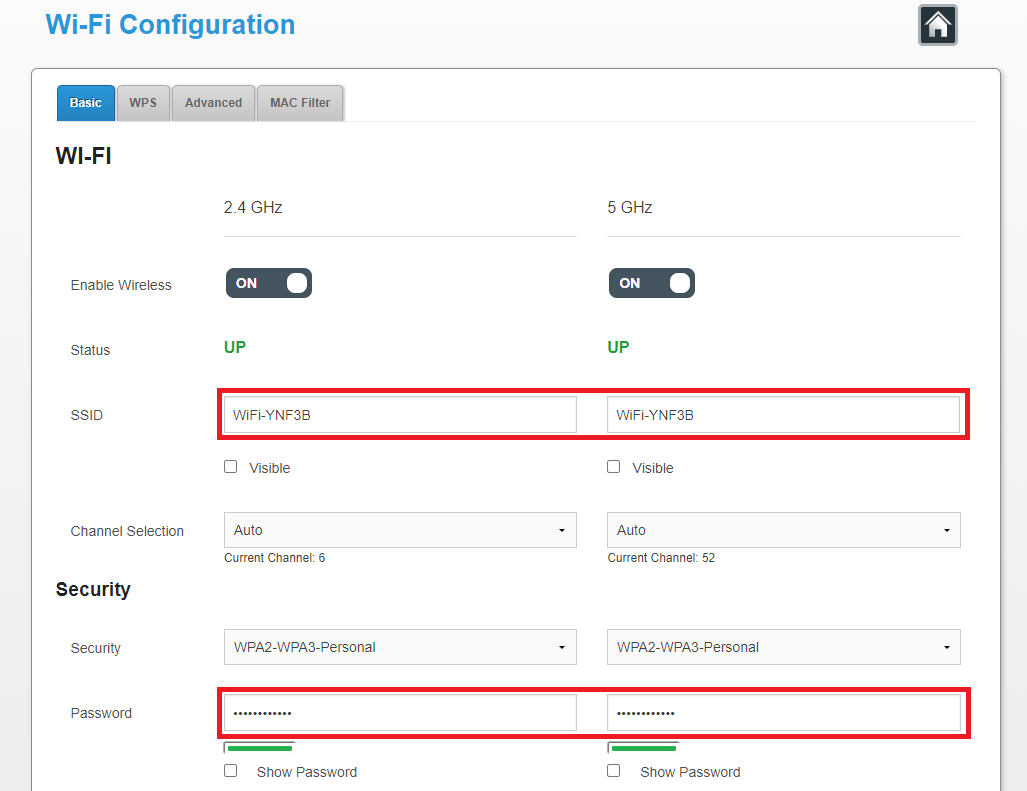
- If you want to change your Wi-Fi name, type it in both SSID boxes.
- Type your new Wi-Fi password in both Password boxes.
Important: Make sure the SSIDs and passwords match for both 2.4GHz and 5GHz – this lets devices automatically switch between networks for the best Wi-Fi signal. - Hit Apply, then reconnect your Wi-Fi devices using your new password.
Change your Wi-Fi password on a TP-Link VR1600v
- Open your web browser and go to: https://192.168.1.1
- Log in with the default username "admin" and default password “admin”. If you have custom login details, use those instead.
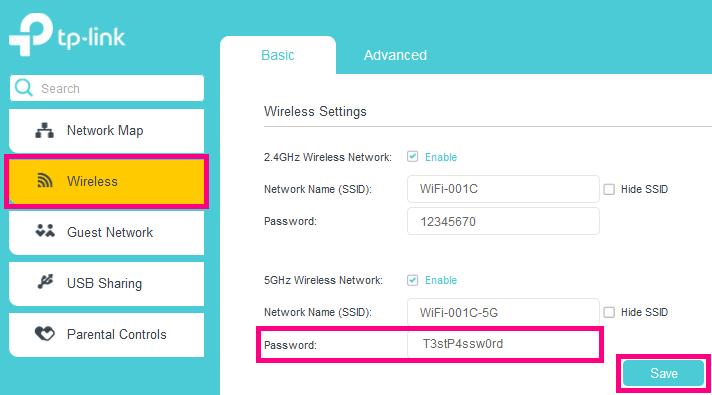
- Select Wireless.
- Type your new password in the Password boxes for "2.4GHz Wiress Network" and "5GHz Wireless Network".
We recommend using the 5GHz Wi-Fi instead of the slower 2.4GHz Wi-Fi unless your devices are too old to connect to 5GHz Wi-Fi. - Hit Save, then reconnect your Wi-Fi devices using your new password.
Change your Wi-Fi password on a TG-789 Broadband Gateway
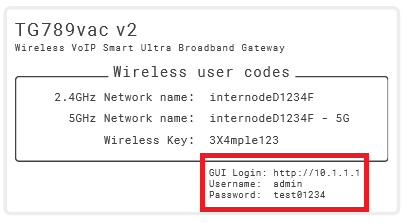
- Open your web browser and go to: http://10.1.1.1
- Log in with the unique default password printed on the modem's barcode sticker or use your custom login details.
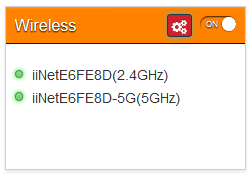
- On the dashboard, select the Wireless panel.
- Select your 5GHz Wi-Fi network from the list. By default, this will be listed under "ACCESS POINTS 5GHZ" with "5G" at the end of the name.
Note: We recommend you use the 5GHz Wi-Fi instead of the slower 2.4GHz Wi-Fi unless your devices are too old to connect with the 5GHz Wi-Fi.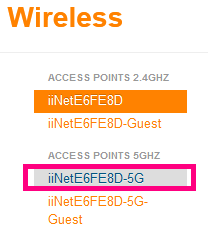
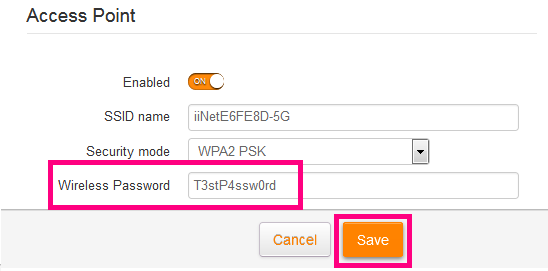
- Under "Access Point", enter your desired new password in the Wireless Password field.
- Hit Save to finish. If your device is connected over Wi-Fi, you'll need to reconnect using your new password.
Change your Wi-Fi password on a Cable Gateway Pro (CG3000)
- Open your web browser and go to: http://192.168.0.1
- Log in with the username "admin" and the unique default password found on your modem's barcode sticker, or use your custom password.
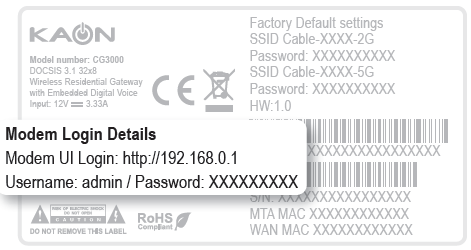
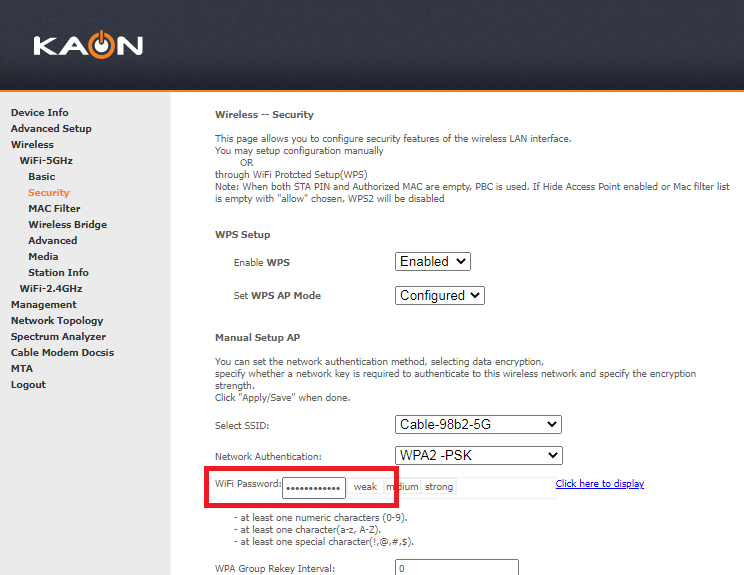
- Select Wireless, then Security.
- For Select SSID, select the name ending in either "-5G" (for the 5GHz Wi-Fi) or "-2G" (for the 2.4GHz Wi-Fi) depending on which Wi-Fi password you'd like to change.
Note: We recommend you use the 5GHz Wi-Fi instead of the slower 2.4GHz Wi-Fi unless your devices are too old to connect to 5GHz Wi-Fi. - Ensure that Network Authentication is set to WPA2-PSK.
- Enter your desired new password in the WiFi Password field.
- Hit Apply/Save to finish. If your device is connected over Wi-Fi, you'll need to reconnect using your new password.
Change your Wi-Fi password on a Cable Gateway Pro (CG2200)
- Open your web browser and go to: http://192.168.0.1
- Log in with the default username "admin" and default password “admin”, or use your custom login details.
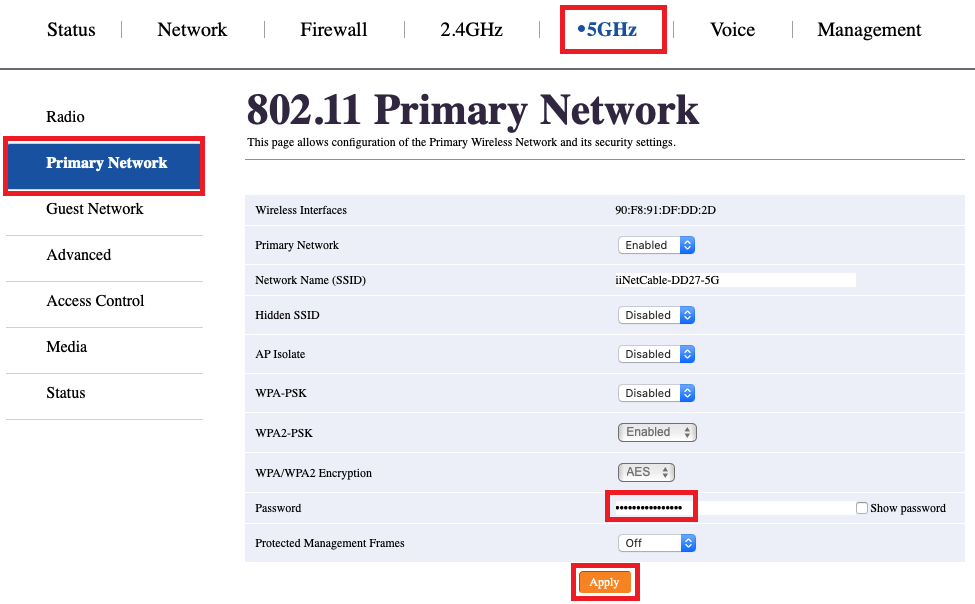
- Select the 2.4GHz or 5GHz tab, depending on which Wi-Fi password you'd like to change.
Note: We recommend you use the 5GHz Wi-Fi instead of the slower 2.4GHz Wi-Fi unless your devices are too old to connect with the 5GHz Wi-Fi. - Select Primary Network in the left-hand column.
- Enter your desired new password in the Password field.
- Hit Apply to finish. If your device is connected over Wi-Fi, you'll need to reconnect using your new password.
You can check the data usage for your iiNet Mobile service at any time. We'll also let you know when you've hit 50%, 85% and 100% of your monthly mobile data - the same goes for any other monthly plan inclusions, like international minutes.
Usage records in Toolbox may be delayed by up to 48 hours.
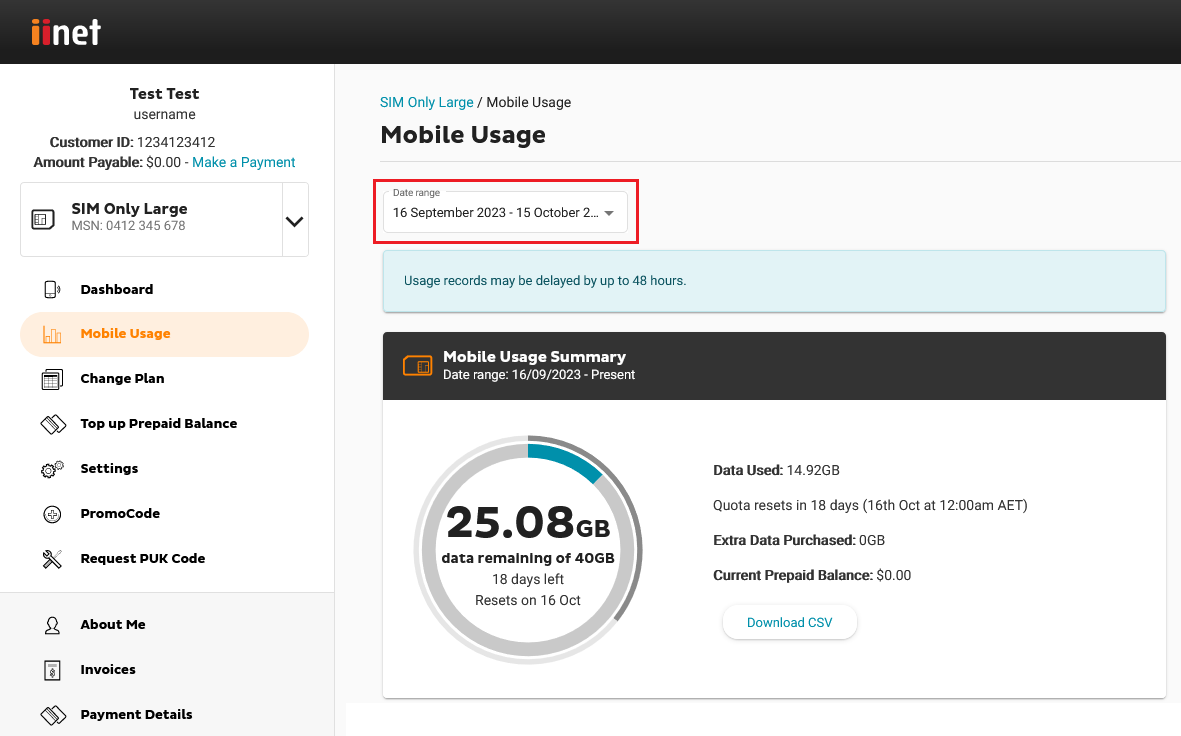
- Log in to Toolbox and hit Mobile Usage.
Never logged into Toolbox before? Check out An Introduction to Toolbox.
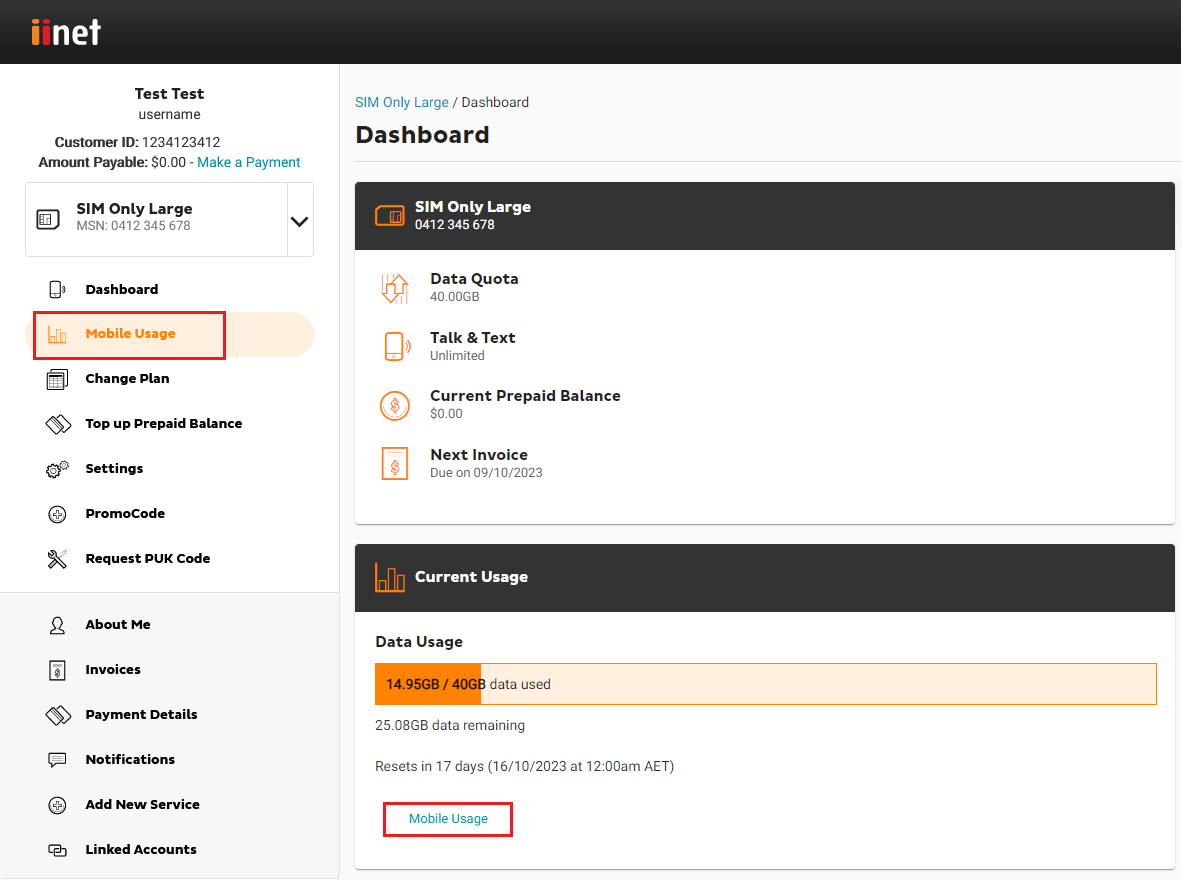
- You'll see the usage for your current billing period by default. To see older usage, choose from the Date range drop-down menu.
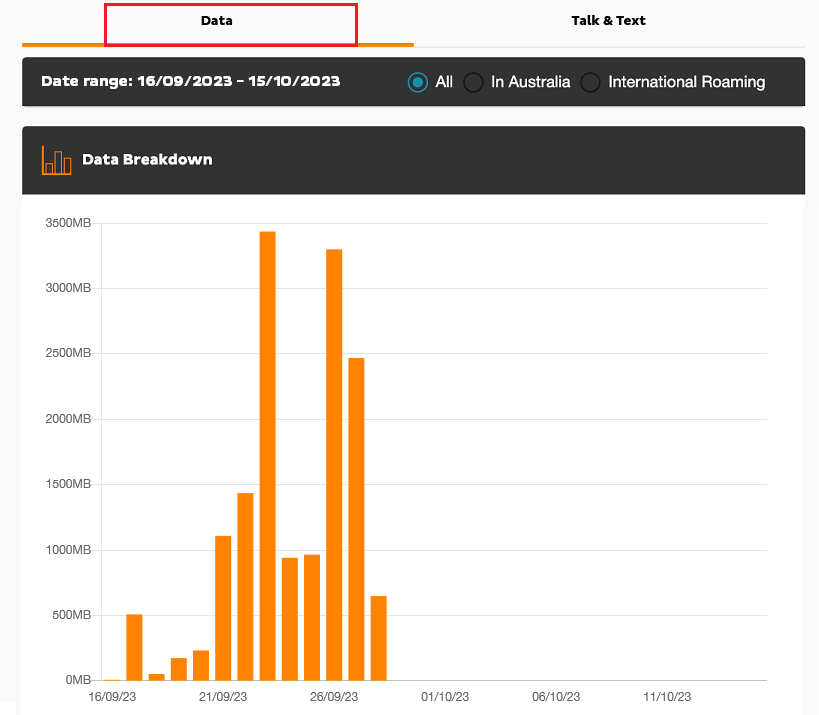
- You can switch between the Data and Talk & Text tabs depending on which type of mobile usage you want to check.
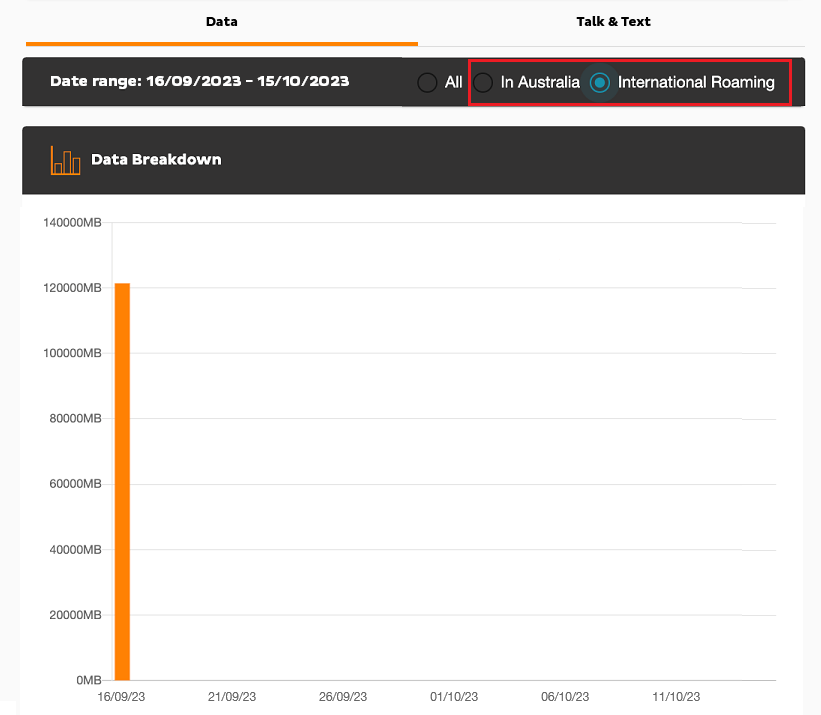
- When viewing Data, you can filter by All data usage, data usage In Australia, or International Roaming.
- You can use the filter buttons to see data usage In Australia or data usage during International Roaming.
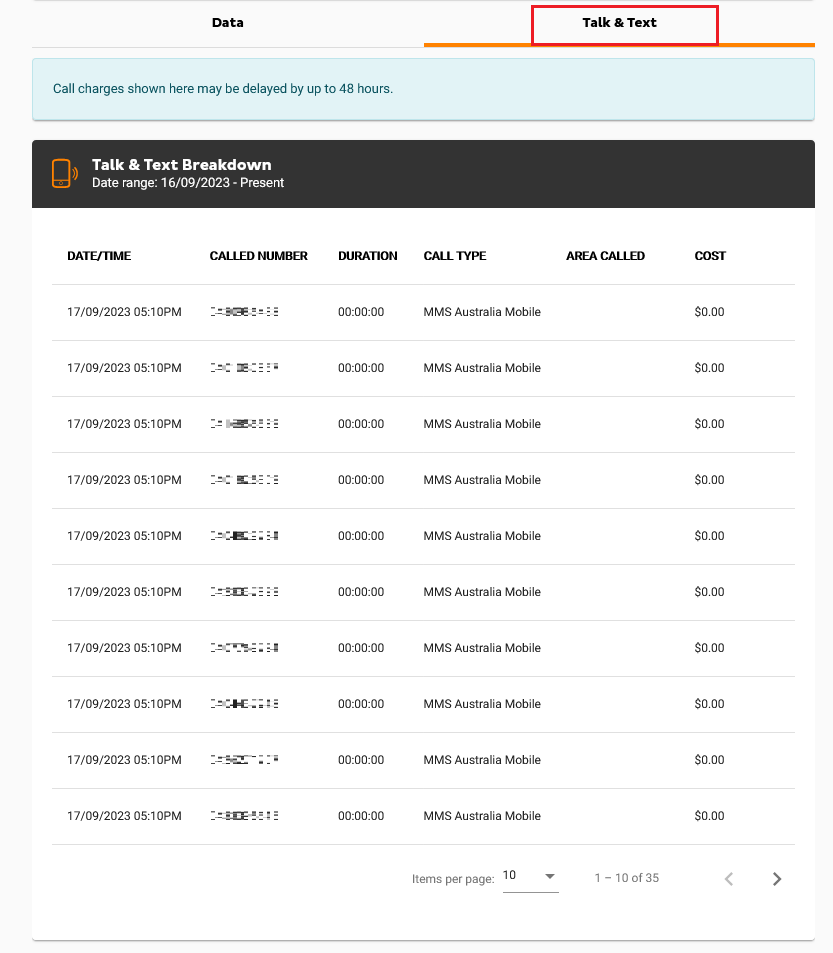
- The Talk & Text tab will show all your calls and texts for that billing period, including Date/Time, Called Number, Duration, Call Type, Area Called and Cost.
If you ever see a SIM Error message on your phone, here's what to do - including how to get your Personal Unlocking Key (PUK).
Select one of the links below to jump to a query:
- "Enter PUK" message
- "Insert SIM" or "SIM error" message
- "SIM card Rejected" message
- "Insert Correct SIM", "SIM card is locked" or "Enter subsidy password" message
"Enter PUK" message
This message indicates that your PIN has been incorrectly entered a number of times and you have been locked out of your device. You’ll need to enter your PUK code to use your SIM.
Note: PUKs are not available for eSIMs. Please request an eSIM Swap to get a new SIM.
- If you have a physical SIM, log in to Toolbox.
Please note: Your one-time password to log into Toolbox is sent to the mobile number listed in the contact details for your iiNet account. If you can’t use this mobile number because the SIM is locked, use another phone to call us on 13 22 58 and we’ll help you out. - Select Request PUK Code to get your Personal Unlocking Key so you can enter it on your mobile handset.
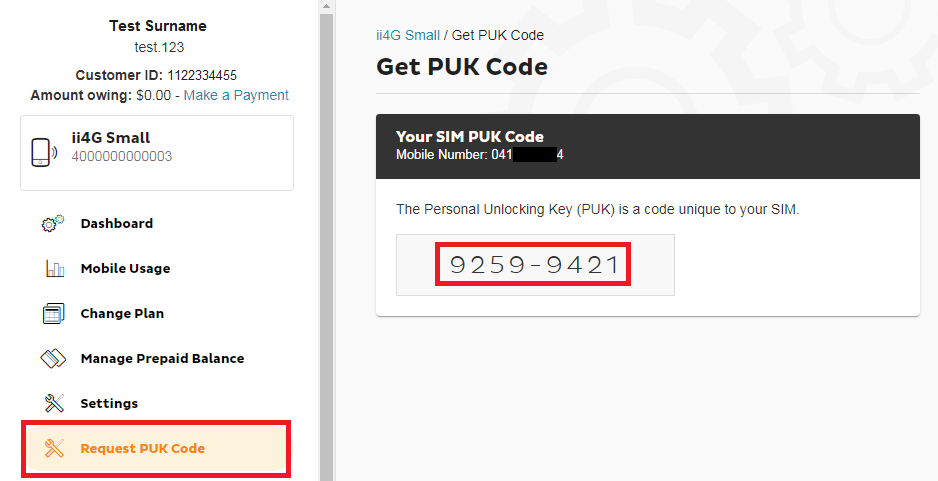
- If you see an error message like “SIM Rejected”, this means that a PUK has been entered incorrectly more than 10 times, and the SIM has been wiped.
- A wiped SIM cannot be recovered. If your SIM has been wiped, you’ll need to request a replacement SIM.
"Insert SIM" or "SIM error" message
An ‘Insert SIM’ or ‘SIM error’ message may indicate that your SIM:
- Has not been inserted correctly.
- Is damaged and cannot be read.
- Is the incorrect SIM size for your device.
Different devices use different sized SIM cards. We don't recommend cutting down your SIM or using a SIM adaptor. If you require a different SIM, please request a replacement SIM.
"SIM card Rejected" message
Your SIM will be permanently wiped if the PUK is entered wrong more than 10 times. You’ll need to request a replacement SIM.
"Insert Correct SIM", "SIM card is locked" or "Enter subsidy password" message
These messages mean that your phone is locked to a non-Vodafone carrier like Telstra or Optus. You'll need to contact the seller to get your phone unlocked.
Note: We can't unlock phones for you.
Which type of SIM are you activating?
| Physical SIM | eSIM |
|---|---|
 |
 |
Important: Your mobile handset must not be locked to a specific provider. We cannot unlock handsets.
Select one of the links below to jump to a query:
Activate your physical SIM
- Wait for your SIM to arrive before you attempt to activate.
- Log in to Toolbox.
If you're activating a new Mobile number and don't have alternative mobile number to receive your passcode to log in to Toolbox, please call us on 13 22 58 to verify your identity and activate your SIM. - Select Get Started.
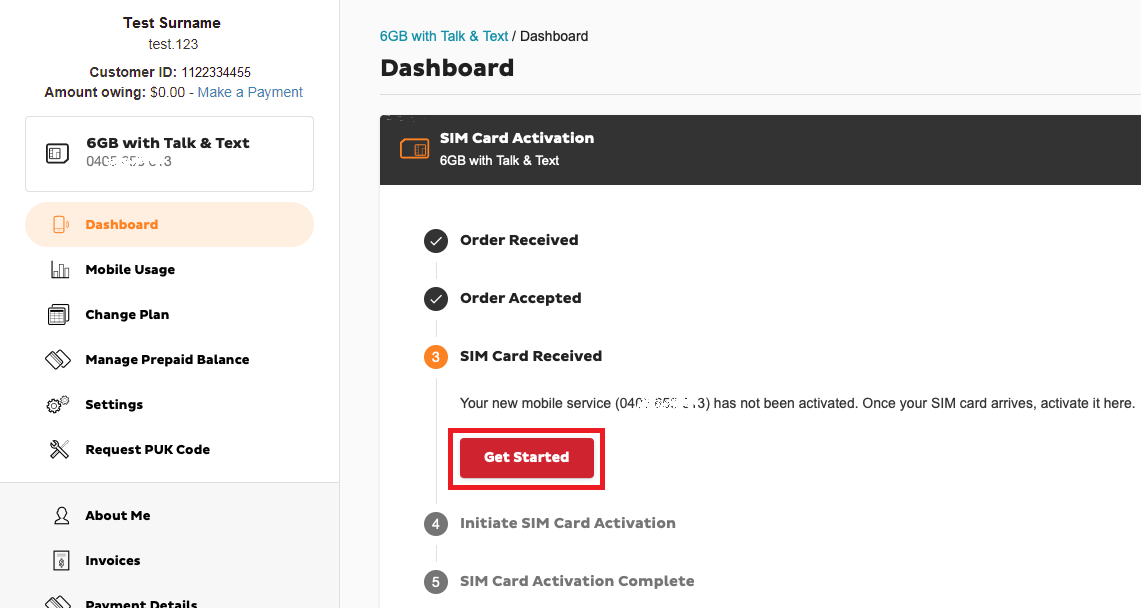
- New mobile numbers and replacement SIMs typically activate within a few hours, but please allow up to 48 hours for SIM activation.
- If you’re porting your mobile number to iiNet from another provider, make sure your current mobile service is active and ready to receive an SMS. Tick the checkboxes and hit Activate SIM Card.
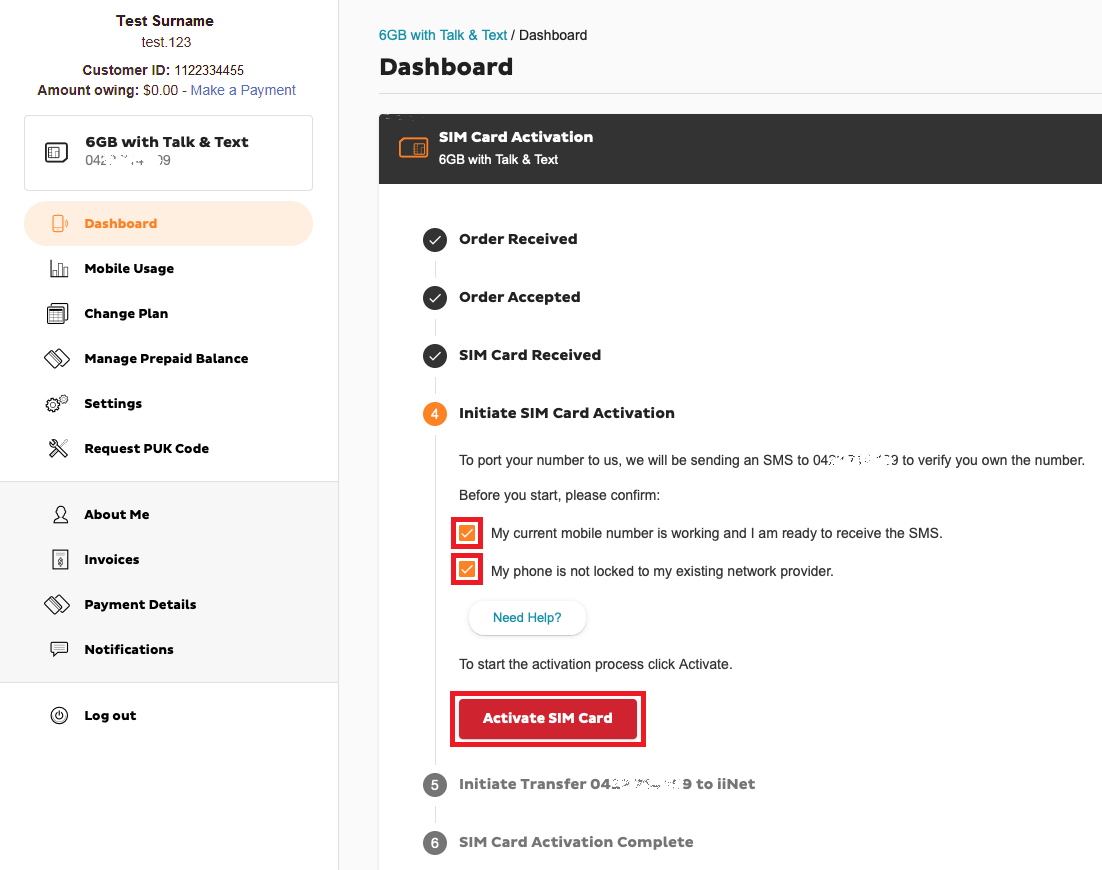
- A porting authorisation SMS will be sent to your mobile number. Enter the code and click Verify Code.
-
The porting process will take approximately 3 hours and will only occur during these times:
Monday to Friday: 8 AM to 8 PM AET
Saturday: 10 AM to 6 PM AET - Keep using your old SIM until it stops working, then that's your cue to switch to your new iiNet SIM.
If you have any issues, please call us on 13 22 58 and we'll be happy to help.
Activate your eSIM
- Make sure you have access to:
- Your compatible mobile handset (to scan the eSIM QR code); and
- Another device such as a computer, laptop or tablet (to display the eSIM QR code).
Note: It’s best if both devices are connected to Wi-Fi. If you only have your compatible mobile handset, please see this advice.
- Use your other device to log in to Toolbox and select Start Activation on the dashboard, then follow the prompts.
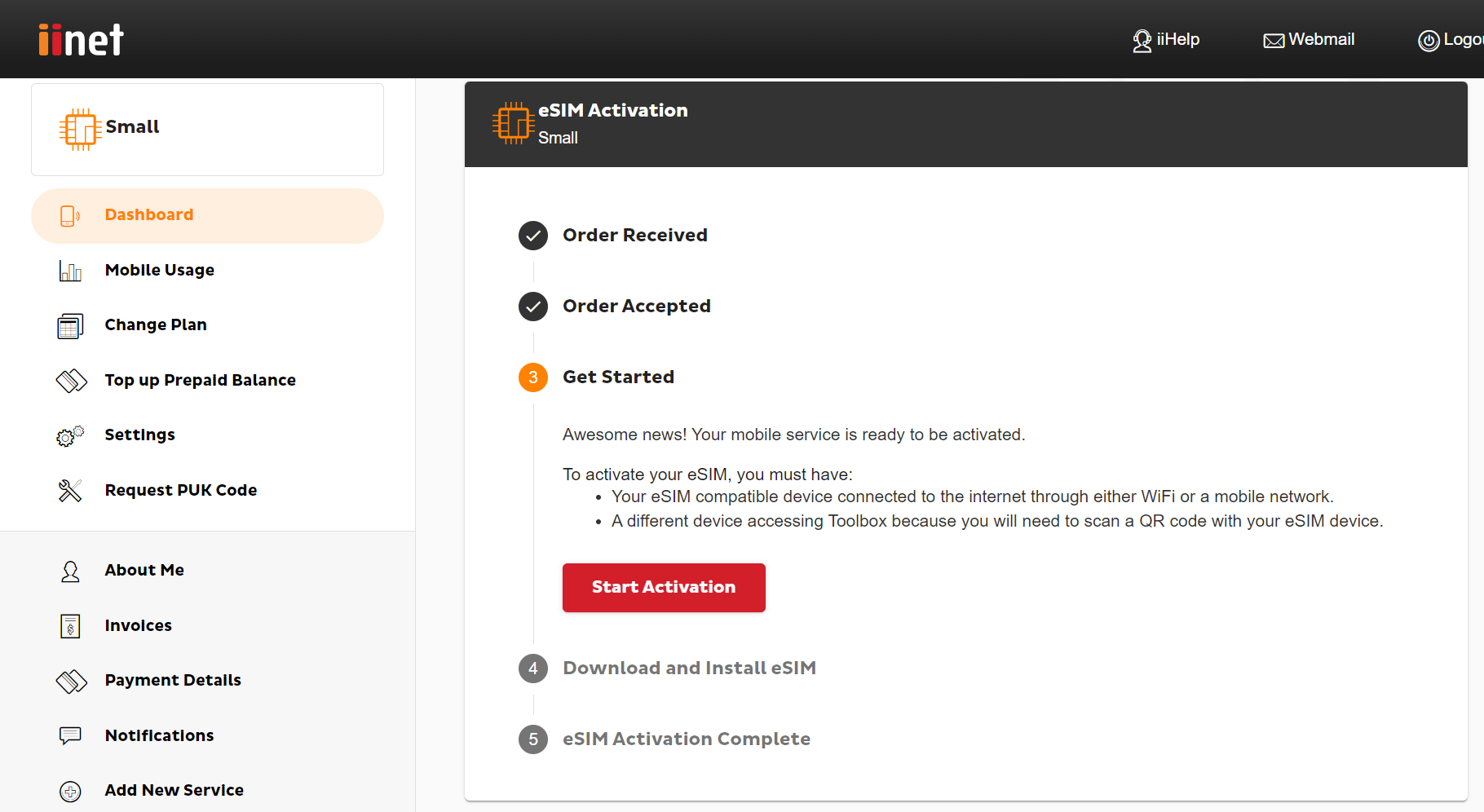
- If you’re transferring your number to iiNet, tick the checkboxes and select Transfer My Number Now. An authorisation code will be sent to your old SIM by SMS. Enter this code and select Verify Code.
- Select Send Confirmation Code SMS, then use your mobile handset to scan the eSIM QR Code.
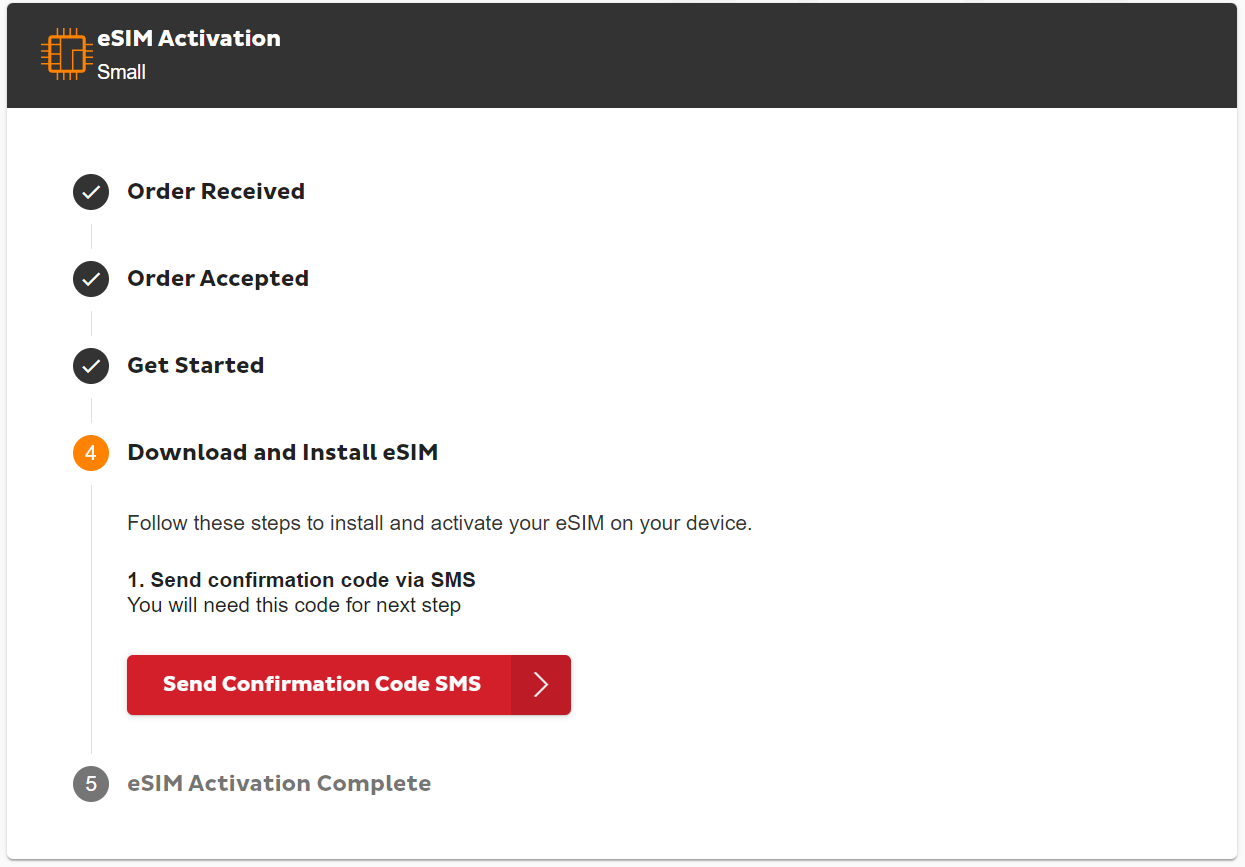
- Follow the prompts on your handset screen to set up your new plan and enter your confirmation code, then your new service should be ready in 15 minutes, or within 3 hours if you’re transferring your number. You may need to restart your handset afterwards.
For more information about using your eSIM once it’s activated, see eSIM Management. - If you’re transferring your mobile number to iiNet:
- You may notice a different mobile number in your eSIM profile while your number transfer is still underway.
- Do not delete your eSIM profile as it will prevent a successful number transfer.
- If the correct mobile number isn’t showing after 3 hours and restarting your phone, please call us on 13 22 58 for assistance. iPhone users can also try these steps.
- Your old SIM will stop working once eSIM activation is complete.
If you couldn’t activate your eSIM
- Follow these steps to update your mobile number in your settings:
- Refresh SIM registration in Android phone settings
- Update mobile number in iPhone settings
- If you still couldn't activate your eSIM, please find your mobile device’s EID then call us on 13 22 58 and we'll be happy to help.
Troubleshooting
How to install an eSIM if you don’t have access to another device
If you don’t have access to another device such as a computer, laptop or tablet to display the eSIM QR code so that you can scan it using your compatible mobile handset:
- Use your handset to log in to Toolbox and access your eSIM details.
- You can then use one of the following options:
- Select Print QR Code to print on a personal/work printer or seek printing services at your local post office or library. You can then use your handset to scan the printed QR code.
- Write down the eSIM details shown below the QR code, then enter the eSIM details manually in your handset settings. Please visit the manufacturer’s website for support information if you’re not sure how to do this.
- Select Email QR Code to send a copy of the eSIM QR code to the contact email address on your iiNet account. You can then access your email on another device such as a public computer at your local library, then use your handset to scan the eSIM QR code.
Always log out of your email account at the end of your session on a public computer. - Be sure to dispose of any printed or written eSIM details securely once you’re done.
How to refresh SIM registration in Android phone settings
- Open the Settings app and select Connections.
- Tap SIM Manager.
- Turn your SIM off, then wait 10-15 seconds.
- Turn your SIM back on again.
- Your SIM registration should now be refreshed with the correct mobile number. If the issue persists, please find your mobile device’s EID then call us on 13 22 58 for help.
How to update the mobile number in iPhone settings
- First, make sure that Wi-Fi or Mobile data is turned on. You can check this in Settings > Wi-Fi or Settings > Cellular.
- Open the Settings app and select Phone > My Number.
- Tap Edit, enter your mobile number, and then tap Save.
- Return to the Settings app and select Messages > Send & Receive.
- Your SIM profile should now be working with the correct mobile number. If the issue persists, please find your mobile device’s EID then call us on 13 22 58 for assistance.
How to find your mobile device’s EID
An Embedded Identity Document (EID) is a unique 32-digit number that can be found in your device settings.
iPhone
- Go to Settings > General.
- Choose About > EID and your EID will be shown.
Samsung
- Go to Settings > About Phone.
- Choose Status Information > EID and your EID will be shown.
- Go to Settings > About Phone.
- Choose SIM status > EID and your EID will be shown.
OPPO
- Go to Settings > About device.
- Choose Status > EID and your EID will be shown.
Here's everything you need to know about the different features available for iiNet Mobile. You can manage these features through Toolbox, and Quick Codes that you can dial from your phone.
Note: Premium SMS/MMS services are not available on iiNet Mobile.
Select one of the links below to jump to a query:
- Voicemail
- How to get your Voicemail messages
- How to turn Voicemail on or off
- Voicemail first-time setup
- Voicemail notification methods
- Do Voicemail messages expire?
- Call Barring
- Call Forwarding
- Manage all types of Call Forwarding in Toolbox
- Manage Call Forwarding Always with Quick Codes
- Manage Call Forwarding if Busy with Quick Codes
- Manage Call Forwarding if Unreachable with Quick Codes
- Manage Call Forwarding if No Reply with Quick Codes
- Caller ID
- Call Waiting
- Extend your mobile ring time
Voicemail
How to get your Voicemail messages
- To access voicemail, call 121 from your mobile handset.
- Alternatively, you may call 0414121121 from another phone and follow the prompts. Enter your mobile number and voicemail PIN.
- To access voicemail while overseas, call +61414121121 and follow the prompts. enter your mobile number and voicemail PIN.
How to turn Voicemail on or off
- Log in to Toolbox and select Settings.
- Use the ON/OFF switch to turn Voicemail on or off. Changes will be saved automatically and may take up to 5 minutes to apply.
Note: To fully disable Voicemail, you'll also need to dial "##002#" from your handset to disable all call forwarding to Voicemail.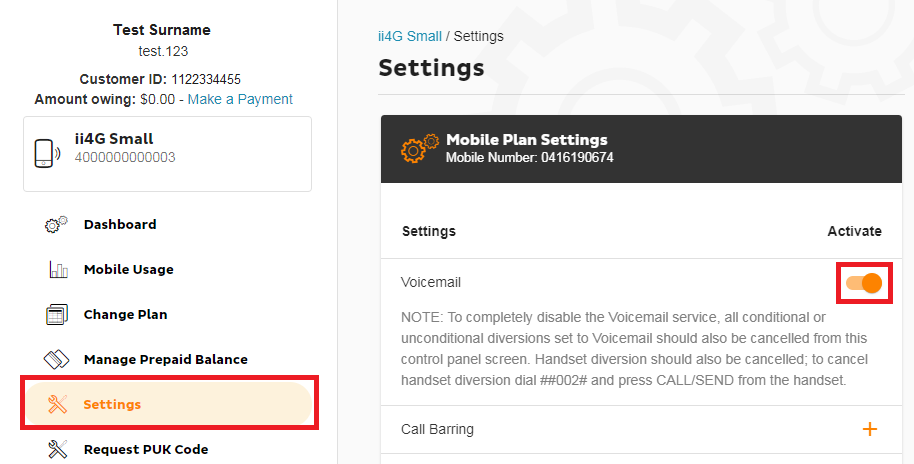
Voicemail first-time setup
- Call 121 from your mobile handset.
- Follow the prompts to set a 4 to 10-digit voicemail PIN. This PIN is required to access voicemail from another phone.
- Record your name to personalise the standard greeting.
- Select your state/territory to set your time zone.
- (Optional) Hold the line and follow the prompts to set a custom voicemail greeting and/or adjust your notification method.
Note: SMS alerts are enabled by default. - Hang up to finish.
Voicemail notification methods
- SMS Alert - Dial 1218 from your mobile handset to enable/disable.
- Ring Alert - No longer available as of 12 March 2024.
- Visual Voicemail (iPhones only) - Dial 1217 from your iPhone to enable/disable. You can manage your Visual Voicemail from your iPhone.
Do Voicemail messages expire?
Yes. New voicemail messages and messages saved in your mailbox will expire after 7 days. If you need to keep a message, you can save it for a further 7 days by pressing 2 while listening to the message. Once a message has expired it’s permanently erased and can’t be recovered.
Call Barring
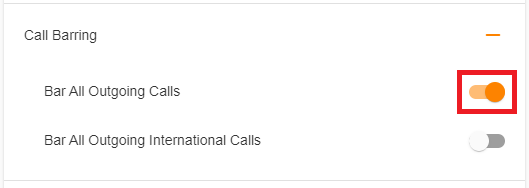
- Log in to Toolbox and hit Settings.
- Select the + (plus) icon next to Call Barring to expand the options.
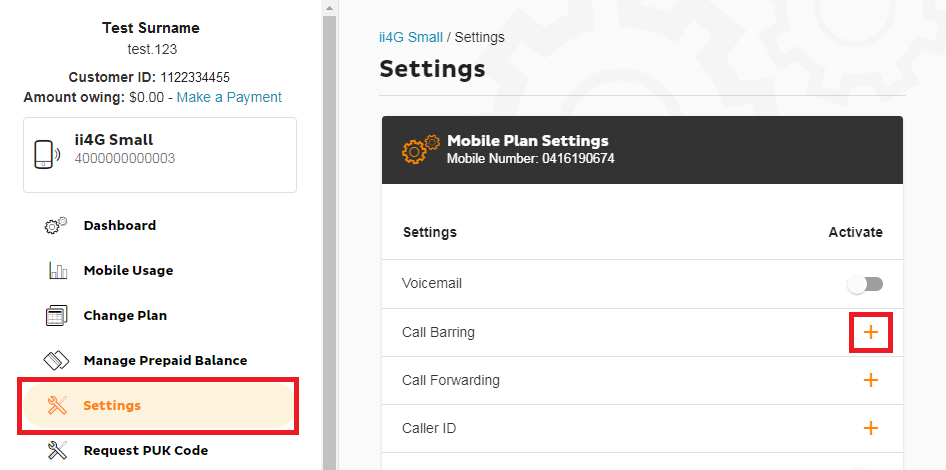
- Adjust the ON/OFF switches for Bar All Outgoing Calls or Bar All Outgoing International Calls as desired. Changes will be saved automatically and may take up to 5 minutes to apply.
Call Forwarding
Call Forwarding will forward calls to your mobile number to a different phone number according to these rules:
- Forward all calls
- Forward if busy
- Forward if no reply
- Forward if unreachable
Note: Standard call costs may apply when any call is forwarded to a new destination (excluding voicemail).
Manage all types of Call Forwarding in Toolbox
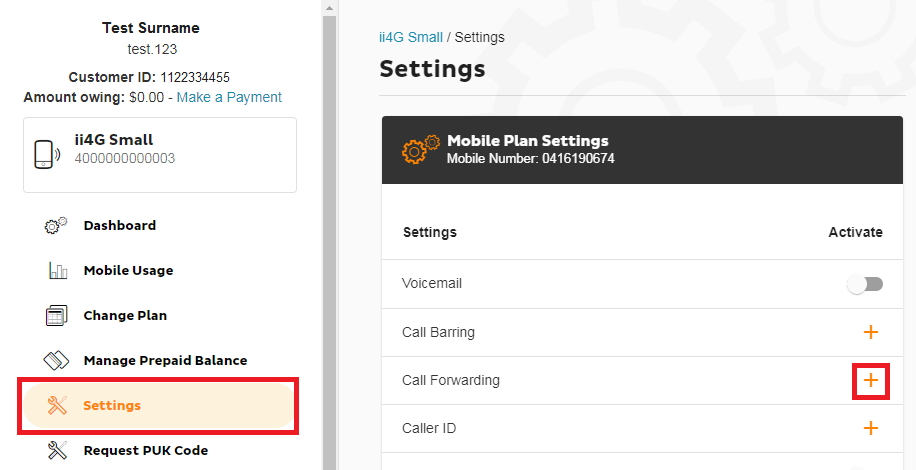
- Log in to Toolbox and hit Settings.
- Select the + (plus) icon next to Call Forwarding to expand the options.
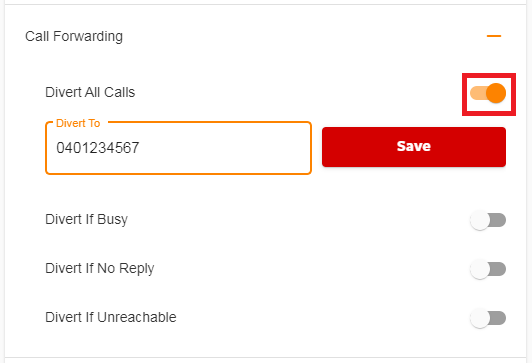
- Adjust the ON/OFF switches for Divert All Calls, Divert if Busy, Divert if No Reply, or Divert if Unreachable as desired.
- To change where calls are forwarded to for each type of call forwarding, hit Edit and enter the phone number in the Divert To text box, then hit Save. Changes may take up to 5 minutes to apply.
Manage Call Forwarding Always with Quick Codes
- To check if Call Forwarding Always is on or off, dial *#21# from your phone.
- To turn on Call Forwarding Always, dial **21* before the number you want to forward calls to, followed by #.
- To turn off Call Forwarding Always, dial #21#.
Manage Call Forwarding if Busy with Quick Codes
- To check if Call Forwarding if Busy is on or off, dial *#67# from your phone.
- To turn on Call Forwarding if Busy, dial **67* before the number you want to forward calls to, followed by #.
- To turn off Call Forwarding if Busy, dial #67#.
Manage Call Forwarding if Unreachable with Quick Codes
- To check if Call Forwarding if Unreachable is on or off, dial *#62# from your phone.
- To turn on Call Forwarding if Unreachable, dial **62* before the number you want to forward calls to, followed by #.
- To turn off Call Forwarding if Unreachable, dial #62#.
Manage Call Forwarding if No Reply with Quick Codes
- To check if Call Forwarding if No Reply is on or off, dial *#61# from your phone.
- To turn on Call Forwarding if No Reply, dial **61* before the number you want to forward calls to, followed by #.
- To turn off Call Forwarding if No Reply, dial #61#.
Caller ID
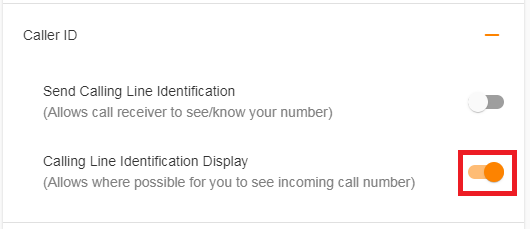
Caller ID allows you to present or restrict your mobile phone number from being displayed when you are calling someone.
- You can turn Caller ID on or off in Toolbox, or by dialling 1571 from your phone.
- To hide your phone number for one call only, dial 1831 before the number you're calling.
- To show your phone number for one call only, dial 1832 before the number you're calling.
- Log in to Toolbox and hit Settings.
- Select the + (plus) icon next to Caller ID to expand the options.
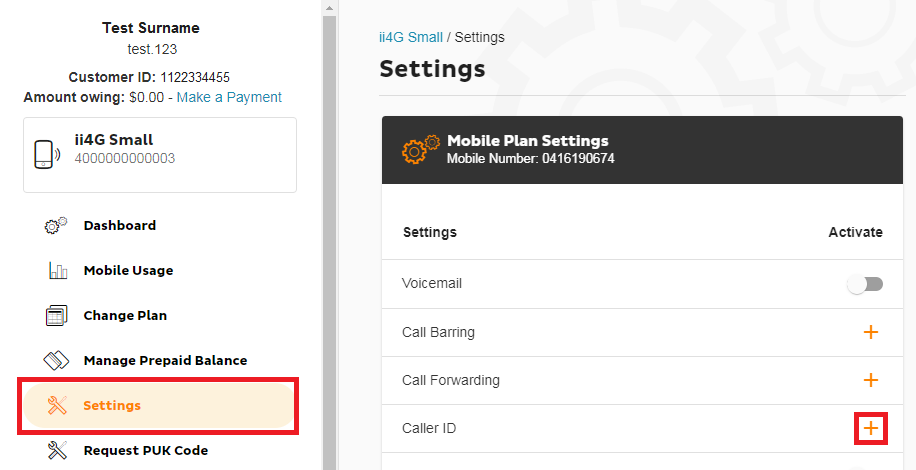
- Adjust the ON/OFF switches for Send Calling Line Identification and/or Calling Line Identification Display as desired. Changes will be saved automatically and may take up to 5 minutes to apply.
Call Waiting
Call Waiting will play a tone if you get another call while you're already in a call. You can swap between two calls - if you get a third call, you'll need to hang up one of the first two calls.
- To check if Call waiting is on or off, dial *#43#.
- To turn on Call Waiting, dial *43#.
- To turn off Call Waiting, dial #43#.
Extend your mobile ring time
You can extend the ring time for incoming mobile calls to a maximum of 30 seconds, in increments of 5 seconds.
Dial **61*121** before the number of seconds to ring (e.g. 20, 25 or 30), followed by #.
When you change your iiNet Mobile plan, your new plan will kick in at the start of your next billing period. If your next billing period begins in less than 7 days, your new plan will kick in at the start of the following billing period instead.
Important: If you submit multiple plan changes, you may override your previous plan change.
- Log in to Toolbox and hit Change Plan.
Never logged into Toolbox before? Check out An Introduction to Toolbox. - Under "Want to try a new plan?", hit the Change Plan button.
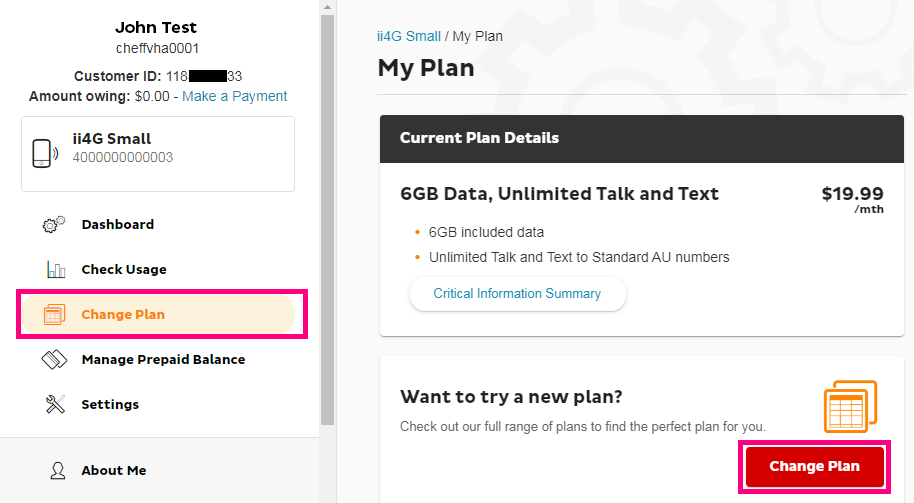
- Choose your new plan from the list of available options. Take note of the date your plan change will happen, then hit Next.
- Tick the box to agree to the terms and conditions and then hit Submit.
- We'll send you an email and SMS to confirm when your plan change is done.
Are most websites fine but you can't get to one website? These steps will help identify the issue.
- The website may just be affected by an outage or planned maintenance. You can check the website on Is It Down Right Now? or Down For Everyone or Just Me.
If the website has an outage or planned maintenance, you'll need to wait until it's over. - Clear your browser cache, then try to view the website. Here are guides for popular browsers:
- Mozilla Firefox Clear cache
- Google Chrome Clear cache & cookies
- Apple Safari Clear history, cache & cookies
- Microsoft Edge Manage and clear cache - Try visiting the website on a different web browser, like Google Chrome or Mozilla Firefox.
If a different web browser works, try resetting your browser:
- Mozilla Firefox Refresh to default settings
- Google Chrome Reset to default
- Apple Safari Remove all website data
- Microsoft Edge currently can't be reset, please use a different browser. - Run a PingPlotter test for the website and keep the results handy. We'll need them to investigate your issue.
- Still can't go to the website? Call us on 13 22 58 and we'll help you.
Here’s how you can set up a compatible bring-your-own (BYO) modem for iiNet nbn Wireless.
Your nbn Phone service and included calls are not available if you use a BYO modem.
Select one of the links below to jump to a query:
Modem compatibility
To work on iiNet nbn Wireless, your modem must:
- Be nbn-ready and able to support your nbn plan speed
- Support PPPoE connections by Ethernet WAN
- Allow VLAN settings to be changed
For a list of modems tested by our team, see nbn BYO modem requirements.
General nbn® Wireless setup guide for any modem
All modems are different. If this advice doesn’t work for your modem, check the manufacturer’s website for a guide on how to plug in and enter the iiNet settings.
- Find your nbn Connection Box (NCB) – this is usually installed on the inside of an exterior wall in your home, sometimes in the garage. Unplug any old modem from the nbn Connection Box and power outlet.
- Use an Ethernet cable to connect your modem's WAN or LAN/WAN port to your NCB's UNI-D1 port.
Our email/SMS will tell you if you need to use a different UNI-D port. - Use the power cable to connect your modem's Power port to a power outlet, then turn it on.
If your modem has a power button or switch, turn it on.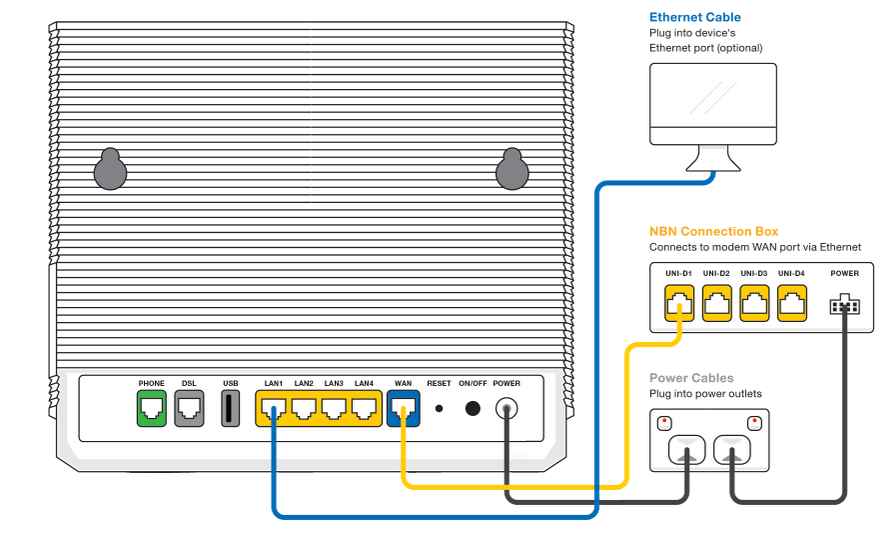
- Connect a device to your modem. You can use an Ethernet cable to connect a device to one of the LAN or Ethernet ports, or connect via WiFi.
The default WiFi name (SSID) and password can be found on your modem’s barcode sticker.
- On your connected device, open your web browser and go to your modem’s gateway address (e.g. http://192.168.1.1). The gateway address and login details can be found on the barcode sticker.
Modems may have a login username and password, or just a password.
- Make sure your modem has the following settings. If you’re not sure how to do this, check the manufacturer’s website for a guide.
Mode/Modulation: WAN
Connection Type: PPPoE
VLAN: On or enabled
VLAN Tagging: On or enabled
VLAN ID: 2
- You’ll need to enter your iiNet username and password for the PPPoE connection. Your username is in emails from us about your iiNet order, and on your iiNet invoice.
If you forgot your password, you can reset it. - Save your settings and wait 5-10 minutes for your modem to connect.
- You should now be online. If you can’t view a website or notice a red or unlit Internet light on your modem, call us on 13 22 58 for help.
We’re fully trained on iiNet modems, but please note that there may be limited support for your BYO modem.
Check the manufacturer's website for a setup guide on how to plug in and enter the iiNet Broadband Settings.